Episode Transcript
[00:00:00] Speaker A: Sam.
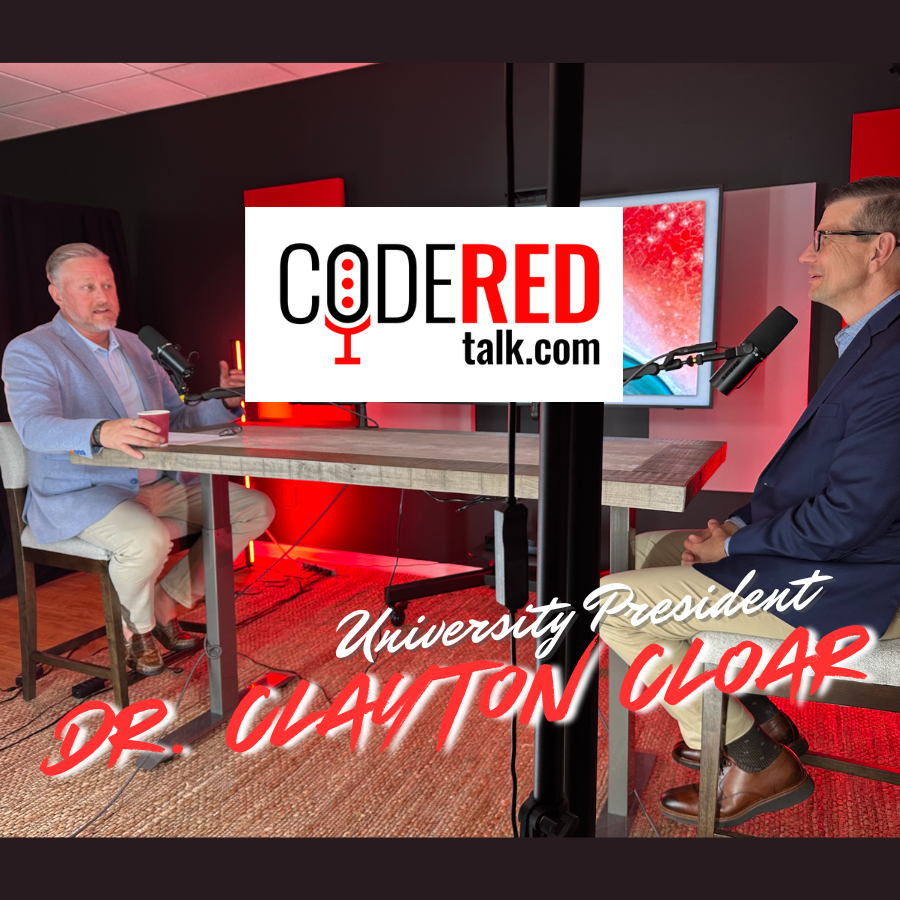
[00:00:30] Speaker B: Mr. Speaker, welcome to the Code Red studio.
[00:00:32] Speaker A: Great to be here.
[00:00:33] Speaker B: So you're running for governor for Florida governor, the greatest state of the nation.
That's quite an endeavor.
So back when you were a pk, when you were a preacher's kid, tell me, was this on your radar at all?
[00:00:46] Speaker A: No, not as a preacher's kid. You know, but the preparation is great, because as you know, as a minister, you have every kind of person that comes in that needs to know about the gospel, that needs to have, you know, grace through Jesus Christ. And those are rich people, poor people, you know, big people, small people, all kinds of races and creeds and, well, not creeds, but they come to Christ. And so you've got to understand how to work with everybody and talk with everybody. And so it was great preparation. Eventually, in politics, it really was.
[00:01:18] Speaker B: People don't understand.
I think being a minister, you've.
There's a sense in which you're the servant of everybody, not only in the church, but in the parish or the community. You know, you're serving the whole area, and people assume that, so they come to you. It's not unusual for your phone to ring in the middle of the night with a problem. My grandmother was a mayor of our hometown for 16 years, and so I learned a lot about pastoring from watching her as a civic leader.
[00:01:49] Speaker A: Right.
[00:01:50] Speaker B: And so, you know, you're constantly dealing with people's issues and people's problems, trying to make life a little bit better for them and their experience with the Lord.
So at what point did you begin to kind of feel that nudge? I know you've accomplished so much.
Speaker of the House, you've served in the military. But at what point did that begin to enter into your life plan?
[00:02:14] Speaker A: Really, at a small, young age. You know, my dad obviously had missionaries come in that would talk about people behind the Iron Curtain at that point. This is during the Cold War. And it struck me, like, why would. If people don't believe in God, these are atheistic.
The Soviet Union, for example, is an atheistic ideology.
They don't believe in God. Why would they fear people having Bibles or meeting in church or praying together? And so I started to kind of look at free states and slave states, for lack of a better way to say it, these states under communism.
And that was the beginning of my understanding of what freedom really meant and how important it is for religious liberty. First and foremost was the beginning of my transition into an interest in the political space and in my philosophy, where it comes to freedom and Religious liberty.
[00:03:01] Speaker B: What was your first race that you entered into?
[00:03:04] Speaker A: Well, my first race was for state House in Jacksonville, and I lost it by two votes.
[00:03:08] Speaker B: Oh, my goodness.
[00:03:09] Speaker A: It was really one vote. And it was truthfully an act of Providence that I did not win that race. It was really good that I lost because had I won, there was a lot of dysfunction in that class. They had a speaker's race that was very fractured in a class that was fractured. And it would have been a totally different experience the way it worked out because of how I lost. Well, I lost my class, for lack of a better way to say it, that I was encouraged to run again. Shortly thereafter, I was in another class, the 2016 class instead of 2014, and long story short, got the confidence of my peers to become the leader of the Florida House in those last two years, which is 22 to 24, that's when I led the legislature and when we really.
Those two years, as the governor would say, were unmatched in building the free state of Florida. No other legislature, he said, accomplished as much anywhere in America that we did. Under those two years under my leadership
[00:04:01] Speaker B: there in the House, you guys got along great. And that was, that was. That's not always the case, even among Republicans. You know, when you have a majority and you have a Republican governor, it's not always the case that they're going to see eye to eye on things and work together. What, what was it about the DeSantis ambition, the DeSantis plan, that caused you to resonate with it so deeply and to support his work?
[00:04:24] Speaker A: Well, I mean, he had his priorities and I had mine. The great thing about being a speaker is like HB1, universal choice or Educational Freedom Bill was something I knew before I even ran back in 2014, that if I got in a position, I wanted to make sure we had that available to every parent, every child in our state.
And so as kind of my baby in that first year, I also added in homeschoolers. So the PEP program was a creation of me asking staff, what can we do for homeschool parents that want to participate. Not everybody does. That's huge. And I respect that. And so you have your priorities as Speaker. The governor and I were on the same page when we passed the Heartbeat Protection act on the same page to end transgender surgeries on minors, boys and girls, bathrooms. All the things, virtually all the things you associate with the free State of Florida happen during that two year period because I went in as a veteran saying, I'm focusing on the mission. I Want to put as many wins on the board and get as many things done that have frustrated earlier legislatures because you see people descending into personality conflicts. That's what you see in D.C. all the time in Washington. And it's very, very frustrating to me. And so my attitude is we're going to criticize in private, praise in public. We're going to get in here and figure out how we can get to an 80%. I don't have to get everything I want, but we're going to get a win for the people of Florida. That's what they sent us here to do. And so that's why we got all these major. And I mentioned some of them. Another priority of mine was protecting children online, getting young kids off of access to online pornography or addictive social media platforms at a very young age. And I think that's wrecking this generation. And so we have the best laws in the country in that regard. Big tech lobbied up to stop me. They could have said, well, make it more child friendly. But those are kind of priorities that I had as speaker. And then the governor had other priorities that we were so philosophically aligned that it was easy for me to say, you know, what are the things you want? Paycheck protection was one, you know, that I was absolutely will do that and other things that were on the governor's list, and I had those that were on mine. And he was very obviously very comfortable because we see eye to eye on things.
[00:06:23] Speaker B: I've tried to, I guess, as one does kind of pigeonhole you and put you in a box to some degree and figure out the best way to describe you. And I think of you, and I mean this in the best possible way as a Reagan Republican. Is that accurate or would you just describe yourself differently?
[00:06:40] Speaker A: Well, I mean, I loved Reagan growing up. What I would say is, yeah, I think Reagan was a generational once in a lifetime, really leader.
But also say that as time goes by, you can see where, even going back to Nixon and Reagan and the Bushes, the comfort level with China, for example. I think President Trump got it exactly right. He was the first one to start talking about it.
The greater protection for American workers. And that America first concept was something, you know, growing up, I thought, okay, you know, free market, all that. But if that's, if we're just, you know, offshoring all of these important national security jobs to a foreign power that hates us, that wants to take us down, we've got to be very careful about that. And so I'm also very comfortable with where this president, President Trump is on a lot of the issues where he's had more of a let's make sure we're taking care of America and protecting us than just opening up America first. Yeah. To China in the way we did. Because they are an enemy, unfortunately, not a competitor, but an enemy. We have to be steely eyed about that.
[00:07:46] Speaker B: Well, I've observed, I just got back. I flew from D.C. through Tennessee. And so their governor's race is heating up right now. And so I watched some of the Blackburn ads and they were really pushing the threat of China. To what degree can a governor of a state combat the threat of Chinese influence in our nation?
[00:08:06] Speaker A: Yeah, great question. And we, I gave you a short laundry list of what we did and that what they call the session of the century, James Madison called. But the other thing, one of the other things we did is ban the purchase of land that the CCP can't buy. Land, farmland.
Land near military bases or land near critical infrastructure.
[00:08:24] Speaker B: They were doing a lot of that at the.
[00:08:25] Speaker A: A lot of it. Now, that's most of Florida land, but, you know, it's got some gaps. In my opinion, we should go further. And as governor, I like to go further to say they shouldn't buy any of our land and in fact, we should be looking at land they've already purchased and figure out how we can get that out of their hands.
But as well as governor, I have control over who attends our private universities, I mean our public universities, rather, University of Florida, fsu, unf. And I don't want to see any professors or students from those countries. Not because I have anything against people from China per se, but I have everything against communists coming into our state. Because we've seen this already with the Confucius Institutes where they were stealing our research.
So they come in as a professor and, you know, academic exchange and this type of thing, and they go back home with a bunch of research that we're doing for the Department of War, for, you know, commercial innovation, whatever, whatever it is that would give us an advantage over China in stealing it. And so we have to be very careful not to allow that to happen.
[00:09:19] Speaker B: Certainly. Well, you know, I'm curious what you see as the biggest threat.
Would it be the threat of a foreign entity like China or would it be something, you know, you have the problems of the everyman that we deal with, the price of groceries, the price of housing here in Florida.
You've got the AI centers going in. What do you see as the greatest threat in the next administration well, affordability,
[00:09:41] Speaker A: look, we've become a victim of our own success, you know, so you build a state, we built a state and I helped the governor do so that everybody wants to live in. And just like people leave failed countries to flee into America as illegal immigrants or legal, either way they want to leave those failed countries. People are leaving failed blue states now to come into Florida to seek freedom to safety from defund the police movements and things that have turned their cities and counties upside down. And so you know, and I'm forgetting now the first part of your question
[00:10:10] Speaker B: was the greatest threat.
[00:10:11] Speaker A: The greatest threat. So affordability is number one because of that surge. Taxes are up, insurance is up, electric bills are up. So my day one priority, I've got a contract with Florida on our website voterenter.com of what I plan to do in the first 100 days. That first first session. These are things that I think we need to get after right away. But the first thing we're going to do is a special session on affordability. I'm the only candidate, believe it or not, that has a specific plan to eliminate homestead property taxes. I've got help for small businesses and renters as well. That's a combination of major savings across all forms of government. I think we can save 10 to 20 billion there. And depending on how much we save, we may not need any or limited replacement taxes, but where we need to replace place those taxes for police, fire, schools. We'll shift the burden over to those who vacation here, those who speculate here, those who are new to the state and take it off the people that make Florida home. That is when I talk about Florida first and running a Florida first campaign, that's number one. And then the hyperscale data centers. I want a full moratorium statewide for now because I think what's on offer is the equivalent of the eight track tape for music. And so you wouldn't brag to your friends like look at my collection and you point to your wall full of eight track tapes. Nobody does that anymore. And these facilities will get smaller, they'll get cooler, they'll get more efficient, less damaging the environment. But what they're offering right now, I'm a hard no, I want a statewide moratorium. And we'll see. Maybe they never meet the burden, but they've got to meet the burden for us. It's got to be right for Florida. And that's why I say all I care about is it good or not good for the people who make Florida home? And that is a day One priority. The affordability piece.
[00:11:49] Speaker B: Speaking about the data centers, you say they, who are they? I've never understood that. Exactly who is behind the data centers?
Is this meta, Is this a different organization who is supplying and purchasing that property?
[00:12:04] Speaker A: Well, it's a small handful of people who have, you know, command of a very powerful technology.
[00:12:11] Speaker B: Are they private individuals? Is it publicly held companies?
[00:12:15] Speaker A: I think it's private. It's private equity. It's anybody that thinks they can get in on the game and make money off of it. But it's not the broad swath of America, I can tell you that. And so as a result, there's a build first, ask questions later attitude, using China and the threat of China as an excuse to say, we've got to do it right now, don't ask any questions, just take whatever we're offering. If that drives up your electric rates, if that damages your aquifer because they need a lot of water for cooling, these 1.0 versions, we'll call them, then too bad if you put it next to a school and it creates all kinds of problems for kids, you know, too bad. No, it's too bad that we're not going to do that. It's so bad that we're not going to do that. And so, you know, you see, Pastor, a different. This goes to the faith component is a different attitude with respect to what is the role of humanity with respect to technology. And if you don't believe that, if you believe humans are just matter and this technology is matter, then you can get your arms wrapped around as a tech bro, that my technology, it's entirely appropriate to monitor, manipulate and control the population like you see in China. And they're building AI data centers for that purpose, to have greater control over their surveillance state, then that's acceptable because you're not a child of God. You don't have inherent, invaluable worth all by yourself. Jesus died for any one of us.
Only you were alive after Jesus. He would have died for you. He would have died for me. That's the power of understanding why we're here, what our role is, who our God is, who our Savior is. And so they don't necessarily, in many cases don't believe that at all. And so if you're a piece of matter, then it's okay to manage you like a widget or like something that's malleable and have control where you have. Talk about transhumanism and Elon Musk is a smart guy, but he's talked about having A chip in your head where you're the smartest guy in the room and you're part human, but part AI or quantum or whatever the technology is. A lot of people, sadly, will take that on because they want to be the smartest guy in the room. They don't want to feel inadequate. You can walk in there with a chatgpt mind that's not on offering for me or my house, I can tell you. But those kinds of things, I think, are why we have to manage the technology for its benefits. I do want to beat China. Get all those arguments, but be very sure, because every technology has benefits and risks.
And bad actors will use now a very powerful technology to do things we must avoid while we can harness the benefits and make sure humans control technology, not the other way around. And as a Christian, you have to have it that way.
[00:14:53] Speaker B: Absolutely. Let me ask you about a couple of more kind of the ethical moral issues, and then I want to talk a little more about the race.
When we look at the expansion of cannabis and marijuana in the state of Florida, any state city you go into, you're going to smell that more and more.
Where are you at and to what degree do you would you receive funding from the cannabis vote and lobby?
[00:15:16] Speaker A: I haven't and I never will. I've been crystal clear that I'm a hard no. I was back in 2024 and I think a big tell pass because everybody says, okay, who's really, you know, everybody's a campaign conservative. Who's the true believer, not necessarily in a Christian sense, but who's the true conservative warrior like DeSantis, like the president, who will run to the fight when others wait for the fight to come to them. And I alone joined the governor in school board races in 22 and 24 to put common sense conservatives in place. And Also in amendment 3 and 4, in 24 alone spent over $2 million that I'd raised into a political committee that I could very much use right now in the governor's race to get my message to a wider audience. But that's what leaders ought to do, is not let your state be turned over to the left. And I wasn't going to wake up the day after and see that we're in anything goes abortion State, anything goes pot state. I mainly focused on the abortion amendment, but I was very Vocal about Amendment 3. I've been very vocal in the campaign that I'm a hard no on that. I will go out and raise money. I will travel the state if that's back on the ballot and it will be to stop them. And they'll bring 100 million plus 200 million next time.
[00:16:17] Speaker B: They've got the money.
[00:16:18] Speaker A: They got the money. And so I'm a hard no on that. And I think unfortunately you just have to look and say, well, if you're telling me that you're going to go out and fight that, if it comes back, why weren't you here 18 months ago to fight it? And I'm the only one in this race that actually showed up to that fight in any material way. Sending out a post on social media just doesn't win the day.
[00:16:39] Speaker B: Right. So we're looking at people think, I think under DeSantis and the PR that has been provided over the last couple of terms that he served as a red state. Do you think we're a red state now or do you think we're still purple or.
[00:16:55] Speaker A: No, we're a red state. We're a red state. That with the wrong combination, the wrong election cycle, good candidate on the other side, bad candidate on our side could lose. And you saw he was close with DeSantis, very close. And so are we more Republican? Absolutely. In part because of what I did the governor did to draw more people. A lot of those people coming in are conservative minded and they're leaving states where they're grabbing kids not for abuse because they don't agree with your values as a Christian parent, for example. And so or health freedom or any number of things are coming here for freedom. So I think we've definitely skewed more conservative. That does not mean that you can put up anybody and still win a statewide race here in Florida. And so we have to be very vigilant and also not go after each other. There was too much fighting and I left in 2024. Too much fighting with the governor and you know, not getting behind doors and criticizing in private, praising in public and fighting, focusing on people, focusing on delivering solutions. And not enough solutions got done in the legislature in the last two years, in my opinion.
[00:17:54] Speaker B: No, I agree. I agree. And I think there was a sharp difference between when you were speaker, looking forward, when I come from Alabama as my home.
So we were constantly fighting the battle of expanded gambling.
And I'm watching the war chest of different candidates.
To what degree would they influence you? If we wanted to put up more casinos in Florida, pass legislation, to what degree would you cooperate or would you oppose expanded gambling?
[00:18:23] Speaker A: Well, debt on arrival. And so that's another one. There was an effort in the Seminole Tribe because of the Seminole compact, which we have in place. And so the status quo is the status quo, but expansion? Absolutely not.
And there was an effort for Las Vegas style casinos to come in and have vote to try to get them in this state. I would oppose that. I would campaign against that. I don't want to see that footprint grow. We have a reputation as a family friendly, you know, beaches, theme parks, all these things. We want to keep that. It's a great brand to have. Let these other states and you see in Las Vegas, they control the political world over there because they're so powerful. We can never let that kind of political power come here. That's why I'm also opposed to recreational pot. The same thing would happen. That's why I'm opposed to this massive, you know, this idea that we're going to be the leader in AI data centers. We'll never get rid of them at that point. If they're bad for Florida, we'll never get rid of them because the political power will be so great that they'll just, you know, I hate to say, buy people off, but they'll have enormous power to stop reform.
[00:19:20] Speaker B: So many of those issues that, that can appear debatable or middle of the road morally. People, people. A pastor told me one time, he said, have you ever met somebody and, and talked to him and said, you know, he was really kind of, his life was fall, he didn't have things together. But then he got on pot, started going to the casinos and everything kind of came together for that guy, you know. Never heard that in my life. You know, it's always the other side of the story and those, you know, we're watching Colorado, the governor's race in Colorado is very interesting right now with a guy like Marks getting on the ticket in a state like that, you know, we could very easily become Colorado if we're not careful, 100%, you know, and this, I think this election could be one of the most important elections in our lifetime.
[00:20:05] Speaker A: And if you blow it and Republicans stop solving people's problems, it would not take a lot to shift that. And once you get a Democrat governor there, then the money starts shifting. That means you start losing legislative races. Everything gets a lot worse, a lot faster than you'd like to believe.
So we're, you know, and look on this earth, there's nothing that is permanent, right? And so we always have to be vigilant. And so my desire and role as governor is to speak the truth without qualification, without worry about what's popular or not popular. We Believe in truth with a capital T. You can argue over what that is, but you shouldn't argue whether we have one.
[00:20:40] Speaker B: Absolutely.
[00:20:40] Speaker A: And so that's the difference with the left is they, like Pontius Pilate, say, what is truth? They don't believe in any truth, which is why they can't define what a woman is. And so we have to make sure when we. I saw a survey or heard a survey that 30% now view favorably Democrat socialism. I mean, it's never worked anywhere. But now, because of a decline in faith, family patriotism that built 250 years, you have an openness because you have a void. You have a void there that can be filled with all kinds of wrong thinking, basically, and have people adopt philosophies that would turn America on its head and destroy our country and these things.
[00:21:19] Speaker B: You look at what's happening in New York right now, and, you know, people in middle America are looking at New York, they're looking at California, they're looking at Florida, and they're deciding what works. And so these policies, they're not only influential at the dinner table for Floridians, but across the nation and around the world.
We've got something to defend, something to fight for here that's very important.
So let's talk about the path forward.
So it's a tight, It's a tough race for you at this point. We're days away.
We really need people to get out and vote.
What is the path forward for you? How do you see this ending up with you being the Republican candidate?
[00:21:58] Speaker A: Well, first of all, back on Mondami, one thing I won't do, because I mentioned people fleeing here is go to New York and say, come on down. I'd love to build a wall, no offense to Alabama and Georgia, but at the Florida line and make New York.
[00:22:08] Speaker B: I know a lot of people that
[00:22:09] Speaker A: would agree with that and let them live under Mondami for 10 years. But the path forward is very simple, is if we get a fair comparison, like the listeners to this show, and they go and do their research on all the other candidates, what we've seen over and over again is we win the vast majority of those votes and over the guy that is the main, he's not really the front runner. Undecided is the front runner, which is important.
We win even two to one. If they know him and they know me. The challenge for us in these closing weeks is to close that information gap, because the voter that's going to sleepwalk into a vote, that's going to Just vote for the name, you know, is who we have to reach out to, which is what we're doing today, which we did all throughout the day on radio, on podcast, to reach as wide a group as possible to say, you know what? It's not that guy, it's Renner that ought to be our next governor that's most likely to carry on the leadership of this governor because I helped build a free state of Florida. I'm not backing up on it. And I'll actually preserve and protect what we love about this state, not just in the free state of Florida, but to make sure we've got affordability again, where people can stay here. We're protecting our natural resources, which I think as Christians, we have a sacred duty to the air, the land, the water, to keep it in sacred trust. And we'll do that, much like this governor has, in a way that nobody else has, the receipts of experience, of results, of vision and leadership. And if people do their research, I just tell them, research all you want. The more you research, the more you're going to want me as your next governor and not the other guy. And the fact that the undecided is still leading is a big flashing warning sign because now people are just starting to pay attention. I think a lot of those undecideds
[00:23:46] Speaker B: are those among Republicans.
[00:23:48] Speaker A: Yeah. Yeah. And I think a lot of those undecideds have really decided on him. They just don't know, is it Renner, this candidate or that candidate. So there needs to be some consolidation here in the next few weeks, you know, where people say, hey, Renner's the guy that can beat the other guy.
[00:24:01] Speaker B: I know, and I appreciate and respect your approach of speaking well about people on the right and people in your party.
I guess I'm talking shop a little bit here. What I'm going to ask you, but I'm curious why the other guy, the leader in the primaries, did not debate.
[00:24:18] Speaker A: Well, that's a question he needs to answer. I think it is disrespectful to voters. They want them. They deserve them. We had a debate. The three main other candidates. There's four main candidates. And the three of us, except for the other one debated, and that was very instructive. And I would encourage people that have not watched that debate to just, you know, go on YouTube and say, Republican primary debate. There's only been one. I was in it.
[00:24:39] Speaker B: And was that the Patrick bet David?
[00:24:41] Speaker A: Correct. And a lot of people said, look, you won that debate. And I saw, you know, this is a Guy that can actually be governor, and they made impressions about the other candidates, which people can form on their own. That's why they're so important, because anybody can put up an ad like, oh, that's a great ad. He looks like a conservative hero. But standing on the stage, having to answer questions that maybe you don't want to talk about, about any topic whatsoever where you're not really the guy and have that exposure and have to defend that record or just say, answer the whys. Let's start with the positives. Every candidate, and this is where a debate comes in, should answer two why questions. Why am I running? I'm running because I helped build the free state of Florida. I don't want to go backwards. I don't want to see retrenchment and a loss of leadership where we're no longer number one. That's my why for running. And then why me is, you know, 20 years in the military, prosecutor, business owner, results as speaker of the House. Two biggest years we've ever had. Vision. My contract with Florida, which is bigger on policy than all the other candidates combined. You can't pass into law a platitude, but you can pass a plan. I've got plans on affordability, on safety, on health, freedom, environment, all these things. And then the leadership I talked about with school board races and Amendment 3 and 4 are four reasons, among others, that are compelling. Why me and not the other candidates? Those are the two why questions that every candidate should answer. And if they can't answer that question, they don't deserve your vote.
[00:25:59] Speaker B: Right.
[00:26:00] Speaker A: And that's how you can see in a debate is who has the compelling case. We want the strongest possible candidate to go up against David Jolly. And if we don't do that, that's how we can lose.
[00:26:09] Speaker B: So right now, by the time this is aired on video or audio, the case will be over. It'll be decided. The case that's before the courts right now with Fischback and the Lieutenant Governor. Do you think Fischback will be on the ballot? How do you think they will rule?
[00:26:25] Speaker A: I did not see the testimony. I heard about the testimony and what I heard about the evidence that was brought forward. You know, the Constitution's crystal clear. You have to live here for the preceding seven years. Now, the unfortunate thing for Fischbach and his very loyal supporters is, is he a Floridian? Sure he is. I mean, he grew up here. You know, there's no question he's a Floridian.
But that's. The Constitution doesn't allow for a break for governor and lieutenant governor. There's just two officers you can fly in tomorrow and run for state house, believe it or not, or state senate, but for governor. And the logic makes sense. You want somebody who's been here for a duration, a period without a break. And so with respect to that break, if the evidence is accepted by the judge that he had a house there, homestead exemption, he paid taxes there, he voted there, that's a tough, that's a tough case to get out of. And so I don't know how the judge is going to resolve that in his favor, despite the fact that the guy bringing the case did not live here in the state of Florida when Governor DeSantis was elected, the guy he's seeking to replace. So it's a little bit of an irony that the one guy's been at Floridian a lot longer than the guy that's suing him. But that guy has just barely lived here for seven years. And so in Fishback, if he had that break, I don't know how that gets resolved in his favor.
[00:27:40] Speaker B: Whoever wins the primary would go up against Jolly. Is your anticipation correct?
[00:27:44] Speaker A: Right.
[00:27:44] Speaker B: What do you think is the winning course against Jolly in the general?
[00:27:50] Speaker A: Look at Abigail Spanberger in Virginia campaign as a moderate. And they've done horrific things, things that are so horribly left that it makes your skin crawl. And so you would expect that there's pent up energy and demand for a far left turn that Florida doesn't want. So Jolly would be pushed in that direction. The other thing I would say is like Charlie Crist is it's one thing to have a different opinion. My opinions evolved on some things, but not things like life, faith, what I believe about the family, basic fundamental beliefs. And you have a guy who was a lifelong Republican and now he's a Democrat spouting, you know, promoting transgenderism, the whole, the whole agenda of the kind of the kooky, crazy left. And how do you, how do you change on everything? And what does that say about your principles? What does that say about your ability to, for you, me to trust you that if you tell me you're going to do A, B and C, that you don't flip on that as well. And so people want somebody, whether you agree or disagree. I respect people I disagree with that. Are there on principle, right. Not my, you know, different principles, but I respect that you got to a different decision based on your principles. And, you know, it doesn't look like he has any, that he can't Change.
[00:28:59] Speaker B: Right.
[00:28:59] Speaker A: I think that's a difficult place to be.
[00:29:01] Speaker B: Well, it is. And I want to say I appreciate the fact that you've, you've gone on camera, you've gone on the record, you've been in the debates.
That's the key is who's going to go against him in debate, who can win on the debate floor. Do you think the other candidates would stand up to him in a debate if they've not specifically the leading candidate on the right currently?
[00:29:21] Speaker A: Well, he's now challenging for debates. Look, I think he, you know, he's got a capacity. He's debated before. I don't think he's going to be horrific in a debate, but can he stand up? I mean, I think he's going to have to answer some questions. And we mentioned data centers. You know, he's been a big proponent. He's getting paid a lot of money to be that way. And David Jolly has taken a position, like, I have to say we need to pause and wait and make sure this is safer and good for Florida. That's going to be a tough issue for the Republican where the public is on the opposite side of that issue. And so I think those are things we have to look at. And again, you don't. You have debates, you have primaries. It should be competitive to have the strongest candidate put their. Put their face forward, put their foot forward. And with the strongest candidate, which I'm convinced is me, I will beat David Jolly. I'm not convinced the other candidate will. I really am not. I've had too many Republicans at the base level say, I've been a Republican my whole life. There's no way I'll ever vote for that guy.
[00:30:12] Speaker B: Well, I think that's the biggest selling point is I do. I don't. Not so much comparing you to the other Republican candidates, it's hard to do that without getting negative. But considering you against Jolly toe to toe, I think that would be a really good race that we would stand a great chance of winning.
So let me just say thank you for coming in today. Thank you for the kindness you've showed to our work here. It's an honor to host you here, Mr. Speaker. Thank you for your service to our country. Thank you for your service to Florida, and our prayers are with you as you go forward.
[00:30:41] Speaker A: My pleasure, Pastor. Thank you for having me. Look forward to doing it again soon in general.
[00:30:45] Speaker B: Amen.