[00:00:00] Speaker A: Sa.
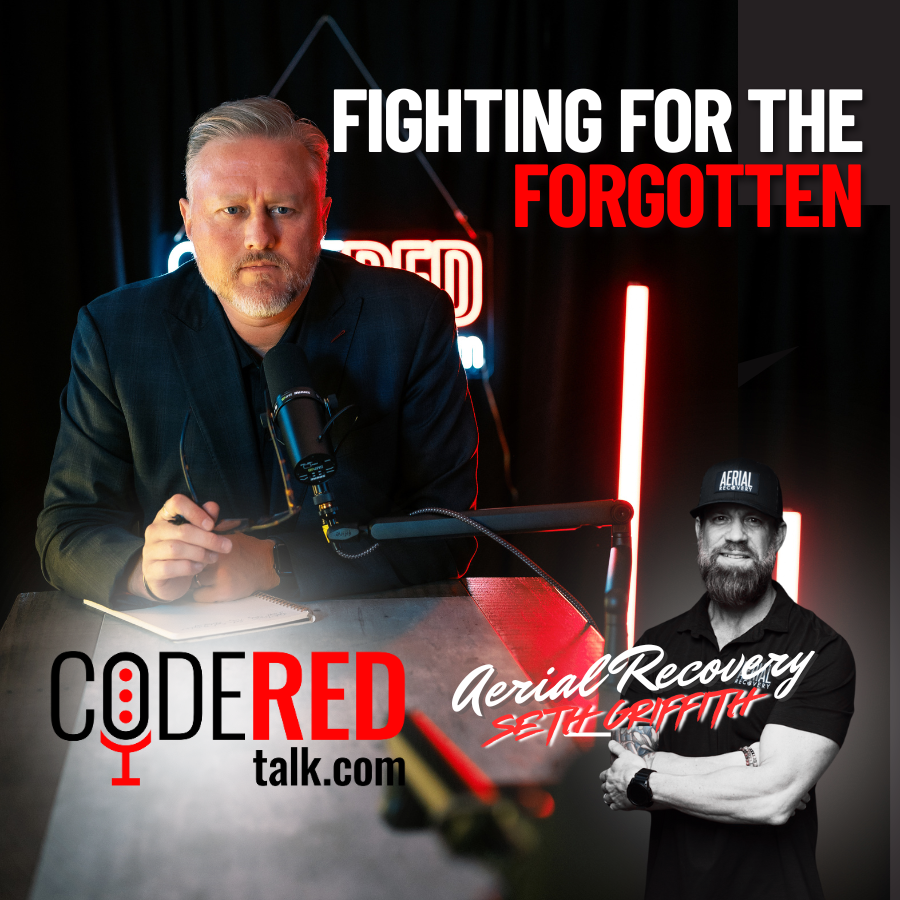
[00:00:30] Speaker B: Jenna Griffith, welcome to the Code Red Studio.
[00:00:32] Speaker A: Thank you. Thank you for having me.
[00:00:34] Speaker B: So we've known each other. I felt like when, when you came in, when you guys, you and Seth came into the church, I'd met an old friend. You know, both of you guys, which were. Our backgrounds are really different in some ways, but it was kind of an instant connection. I felt like, I mean, you were, you were from Nashville. Did you grow up in that area?
[00:00:53] Speaker A: Raised.
[00:00:54] Speaker B: And I grew up just south of there in Alabama. So that was part of it is we just had, you know, familiar stuff, stories and, you know, places that we hung out and that sort of thing.
But it was exciting to me as a pastor just to see how you guys are both leading and impacting the world.
And so now as an author, as a, You've done real estate, you've. You've done public speaking, and now you're the author of a best selling book. Tell us a little bit about that. And what led you to, to put pen to paper.
[00:01:32] Speaker A: Yeah, it's quite the interesting story because when Seth and I met, my husband has been on the show before. When we met, we were both in real estate. He was a custom home builder and I was just doing traditional real estate. And then he took a job with a nonprofit aerial recovery group that was going to take him all over the world again, basically taking us back into the same lifestyle that we had as, as military.
And as anyone can imagine. I kind of freaked out about that a little bit. I was really nervous because I really didn't want to go back into that lifestyle. I didn't want to be left behind or feel those types of abandonment feelings or taking care of the house and the kids and all that.
And I really had a moment where I thought, if this company is going to repurpose veterans and use them in these humanitarian ways, which is incredible.
I know I'm not gonna be the only spouse that's gonna sit there and say what I thought we were done with this life. I don't wanna do this anymore. And so it really started with me just saying, hey, here's my number.
If you need to talk, if you need a friend, if you need someone that just gets it, give me a call. We can, you know, we can talk.
And I just happened to be at a relationship retreat, me and my husband. And I met this woman and I said, oh, what do you do? She said, I'm a book publisher. And I said, I've always wanted to write a book. She said, well, you should come to my Number one best selling boot camp. And I did. And the rest is literally history. It just drew that right out of me.
[00:03:07] Speaker B: Well, and you know, so many times when you hear that, you're like, yeah, sure, I bet you really have. I bet you could really help me write a number one best selling book. But it was legit.
[00:03:16] Speaker A: She's done it twice now.
[00:03:17] Speaker B: That's awesome.
So, you know, some of our people will know exactly what we're talking about with aerial recovery and what they do with veterans. Most of our crowd, I would think pretty much all of our viewers are patriots. They support military, but they don't always understand what the family life is like.
And you know, Julian and I came here from a army community at Redstone Arsenal up in Huntsville. And I remember going into a, a student event, it was in Jackson, Jacksonville, Alabama and these were probably 14 to 19 year olds. And the guy putting it together, he said, just understand these guys have walls up. It's a little different than maybe when you go into a high school or a church or whatever.
And I was in my early 20s and very confident, way too confident at that time. And I'm like, don't worry about it. I know kids, I can connect with them. This won't be an issue.
My history had been when I would speak to teenagers, we would see dozens of decisions for Christ. It was a really awesome time in ministry. And we had the privilege to go into public schools, to college campuses, do multi church events.
I go in with these kids of military families.
I preach the same sermon.
I'm just expecting that harvest to be there.
We give the invitation and it was crickets and they're just looking at me.
They weren't looking at me like they hated me. They weren't looking at me like they didn't believe anything I said.
They just didn't know if they could trust me yet.
And so that was a wake up call to me that this is a different life and these kids are not going to be quite as trusting as maybe the kids at the Baptist church that I was accustomed to speaking at.
And so that let me know when we came to Redstone Arsenal. 70% of our congregation there were connected either as civilian contractors or they were in the military themselves.
Some great, some amazing people.
However, it was different. And I saw they did have unique challenges and their marriage was one of the big challenges.
You had guys who were leaving for sometimes months at a time and if, if the wives didn't have a community that understood that and pulled together.
It was a scary season for their Life. How did you become aware of that?
[00:06:04] Speaker A: I didn't for a very long time. When I was a military spouse, I had my core group of friends, so there was three of us, to be exact, that we just. We were family. We were chosen family. We went through so many hard times together, and I'm actually still really close with one of them now, but I didn't realize how powerful that was. I. I will be honest, back then, it felt more like commiserating with someone else. But when I would meet new people or new spouses, I would always feel like I had to have it together. You know, there's this, like, this unspoken expectation to either always have it together, not complain. You can't be upset because you've got to hold it down while your spouse is out there fighting the good fight. Because if things back home aren't good, then there could be a lot of trouble.
[00:06:55] Speaker B: How old were you at this time, and what did your family look like at that point?
[00:06:59] Speaker A: I. I got married at 21, married a soldier, and moved from Nashville to Fort Carson, Colorado. So you can imagine my mother's detriment when that happened. And it's so funny now because my children. My oldest is almost 23, and I look at him thinking, what was I thinking to be.
[00:07:18] Speaker B: Which I think we. I think generation was a little different at that age. I hope we were. I think we were, because our kids are at the same. Same age range now. And I'm like, oh, yeah, they're not ready to get married.
[00:07:29] Speaker A: There's no way they could be a parent or be a husband or a wife. Yeah, it was just.
So I was a teen mom. I had my oldest son at 18.
So I did have that. You know, I had to mature really quickly because I have another human being that relies on me now. And I also think that's kind of why I got married when I did, as young as I did. I had a man who was stable, in a stable career and who accepted me and my son. And that was really powerful for me at that time.
And So I spent 10 years. We were at Fort Carson, and then we moved to Fort Bragg, North Carolina. It's been pretty rough. I don't know how it is now, but it was pretty rough back then.
And had our second son, Zachary.
And so that was over the course of 10 years. And we are, unfortunately, one of the many, many couples who go through the transition out of the military and end in divorce. But there's a lot of. There's a lot of meat in between there a Lot of life that happened where I honestly felt I went through phases. Like, I know. I love that this podcast brings out real Christ walk, you know, stories that we have, because I really went through a lot of valleys and a lot of mountains during that time, where half the time I was just so on it for Jesus. And other times where I thought, where are you, dude? Like, I need you right now.
[00:09:02] Speaker B: And you had a experience with Christ. You had a relationship with Christ as a young person.
[00:09:09] Speaker A: I was raised in the church.
I was raised in a church that was very Old Testament belief. And so that was something that took me into adulthood, really realizing I never had a relationship with Jesus. I was afraid of God, and I was trying to fall in line, which is a huge difference. And I really tried to change that for my children, too.
But, you know, for example, being a teen mom getting pregnant out of wedlock is a huge no, no.
And so I had to wear a ring, you know, to be like, oh, well, I'm engaged. Which was a complete lie. Sorry, Jesus.
Just so that there wasn't judgment coming
[00:09:49] Speaker B: down on my family at that season. In life in your early 20s, and I don't know if you perceive yourself this way, but I see you. I see Seth as kind of classic overachievers. Like, you guys are successful.
You're making an impact beyond your immediate circle of influence. Did you see that at that time? Were you kind of chasing a dream or success?
How did you perceive yourself at that age?
[00:10:18] Speaker A: It's so funny that we're talking about this, because I look at that woman and I want to hold her and hug her, and I was not as motivated. My mother will tell you I was not motivated. I didn't have a vision for my life. That's what these books are for. That's what Service and Soul is for, is to help other spouses that were just like me say, you can still have a dream. Because I really didn't. I was in pure survival in that 10 years. I'll just kind of Cliff Notes version it in that 10 years, of course, getting married, moving. I was the first one in four decades to leave Williamson County. In my family, so my whole family, of course, you know, I had to shake things up, which I'm a middle child, so it's, like, to be expected, but.
So we moved to Fort Carson, started a family very quickly, and I was in a car accident, lost that child.
Two months later, we're moving to Fort Bragg, and we get pregnant again with our youngest, and he's born at 23 weeks barely. His eyes were still fused. He was just so small. His skin was completely translucent.
And so I'm 20, barely turning 23 at that time, which is another thing. I look back and think, I don't even know. Like, that was Jesus. That was the time where I grew the closest with the Lord, because that was my only option. I wasn't a doctor. I could rely on these machines to save my child. But I just knew that that was.
I couldn't control the situation. I had to lean on my faith.
[00:12:00] Speaker B: Well, and I'm sure at that season, you didn't have a strength and soul. You didn't have a book that you could lean on to kind of give you at least a game plan.
[00:12:09] Speaker A: Well, and we had just moved there too, so I didn't even have friends. I had one friend that I met at the park and she invited me to church. We went to church that Sunday. I want to say it was an Episcopal church. I had never been to a denomination that. Where I was like, you're raising your hands and there's music, you know, it felt very strange to me.
And I had Zachary that week.
[00:12:33] Speaker B: Wow.
[00:12:33] Speaker A: And I am telling. So one service, let me tell you what showed me the love of Jesus.
One service, and every single day, someone from that church came to the NICU and prayed over my son.
[00:12:46] Speaker B: Wow.
[00:12:47] Speaker A: Like, that's Jesus.
That's really. When that came to me of what's, you know, it was kind of. It took me aback because I was like, what's happening here? You don't know me. You don't know my family. Why would you do this? Why would you go out of your way?
So that was really cool. That's really when I started strengthening my relationship because I had to.
And, you know, Zachary just turned 18. So praise Jesus for that.
[00:13:13] Speaker B: Oh, yeah, it's amazing. It's a miracle in itself.
[00:13:16] Speaker A: He's a miracle.
[00:13:17] Speaker B: I look at, you know, we're in a Navy community now. We have a couple of Navy bases here, close to. And for those who don't know, you guys are in our church and have been for quite some time, and you'll understand what I mean. We see, you know, wives with little kids come in quite often. I was sitting in my office, you know where my office is at back the campus. I'm looking out, and when those. When those parking spots fill up, it means everything else is pretty much full. Those are not great parking spots because it's kind of hard to get in from parking back there. So I see this lady pull up, she's in a pickup truck. She gets out, puts one or two kids in a stroller. She has another one that she's carrying. It's pouring down rain. And I'm sitting here going, gosh, if that was Julie, you know, So I go outside and. And I offer to help her. And she's like, I'm good. I've got it. And I'm thinking, okay, I understand. She doesn't know who I am. She doesn't know anything about me.
I get that. You know, but it's so. I can't imagine what some of these ladies are going through, you know, and their husband's on a submarine, he's on a ship somewhere, and they can't even communicate. No. And she's got enough foresight and leadership in and of herself to get those kids up, get them ready on a Sunday, get them in a church that she doesn't even know who the preacher is.
That takes a lot of leadership and faith.
So, you know, I'm saying all that just to give some context to the kind of forgotten service members that are in our nation and our communities, that you are really called to speak to those people and serve them.
And you've been there.
So from Zachary's birth.
Walk me forward.
What happened? When did you hit a rough spot that caused things not to work out?
[00:15:20] Speaker A: So we got Zachary home in 127 days, and throughout that next year, he had 15 shunt brain surgeries and was in and out of the picu, which is the.
For, you know, kids that are not in the nicu.
We got him. It took us a whole year to get through all of that. So that. And we moved from Fort Bragg to Fort Campbell. So, you know, these spouses dealing with real life. And then we got to do a move and, you know, do we hire someone or do we try to make some money by doing what's called a Diddy move, you know, and so we get to Fort Campbell, we're looking for housing. We find. And Zachary spent so much time at Vanderbilt when we moved, we finally get him stable, and a few months later, my husband gets in what's called a hard landing. So he was in Afghanistan.
The helicopter went down. It was a Chinook, which is a massive helicopter, and did a bunch of barrel rolls, essentially knocked everybody out.
And my then husband was a medic, so he, He. Everybody comes to. He's helping everybody, and they. They fly in pairs. So then he gets on the next one and completes the mission before ever getting seen himself.
Well, he turns out he has a TBI from that injury. And as you can imagine, how do you treat a TBI in the military? You just give him medication and, you know, pills, pills, pills. So unfortunately, he got really hooked on opioids and alcohol. And so that really, we both were in it at that time. I mean, I was heavily abusing alcohol.
We were just kind of numbing out together.
And we did that for several years, like several, three or four years.
And then of course, his problem got a little rough. So rehab, he got sober and was sober, stone cold sober for two or three years maybe. And then one anniversary, he says, you know, I think I could have a glass of wine with you. And selfish me is like, yes, you know, I can have a normal husband. And it just opened it all back up again.
[00:17:37] Speaker B: Right.
[00:17:38] Speaker A: You know, just couldn't, couldn't beat that demon.
[00:17:41] Speaker B: I get it, I get it. Life happens. And so you've been through that situation.
The marriage didn't make it.
How long before you connected with Seth and started trying again with putting a family back together?
[00:17:58] Speaker A: Yeah, so as soon as we separated, moved back home to Brentwood, Tennessee. And that is when I started that, like, motivated full force because I had to.
Working several jobs, you know, trying to make things work well in that community,
[00:18:16] Speaker B: in and of itself, is sort of a dreamer's community in a lot of ways.
[00:18:20] Speaker A: And I've been very blessed. My parents have both been entrepreneurs, and I've seen them, you know, the ups and downs, the hustle, the grit. And like I said, I had to. I really didn't have a choice. But I also knew, you know, with Zachary, Zachary was still in seven therapies a week, so I was still running him all over the place.
So I needed something that was flexible, and that's what real estate, you know, was able to bring me at that time.
To answer your question, during that, during that or after my divorce, I really started teetering with healing and WUSA and retreats and mantras and all these things, because I went through that darkness of, well, Jesus isn't enough for me right now. I need something a little stronger.
And I started dabbling into crystals and all of those types. Like I said, woo activity.
And really lost myself as far as my relationship with God is concerned.
[00:19:27] Speaker B: Isn't that strange? Because it's like there's a sense in which I think about what Paul said in the New Testament where he said, idols on one hand are nothing. They're just carvings in wood. And on the other hand, demons hijack those idols.
And so there's something so don't be superstitious, don't be freaked out if you see a crystal. But at the same time, if you become enamored with it and go too far, it really can have a spiritual implication 100%. And we see it all the time. You know, we see people that we're on in a beach community. People come here and they're kind of from that or they're searching for that something that, that what, you know, old school hippie world would kind of offer to them. And there's part of me that looks at it and goes, oh, it's perfectly harmless. There's nothing to it. And since there's nothing to it, I'm not going to worry about it. But I've just seen too much.
[00:20:22] Speaker A: But that's where it gets. You use the word searching.
That's exactly what it is. It's searching. And the enemy has done a really great job of saying, like, but this is love and this is light. And we're, we just want to make people happy and we're bringing peace.
That's a disguise and it'll suck you right in.
[00:20:40] Speaker B: It will, and it does, for a short time, kind of work in a way.
It really can help you to empty your mind of a lot of anxiety and focus on something outside of yourself. It's just what that something is that gets more defined as you go.
And early on, it's nameless, formless universe. Yeah. And it's a very vague reality, but it becomes less vague over time. And that's when it gets dangerous.
[00:21:11] Speaker A: Yeah. And that's, I'll be honest, that's what happened to me. It. I ended up in a situation where I hadn't. That was my first and hopefully only spiritual attack in this way, because I'm covered by the blood, but it knocked me down. I'm talking so much anxiety that I was fainting, like at the grocery store.
[00:21:31] Speaker B: I hear it all the time, you
[00:21:33] Speaker A: know, and I, I'm like, oh, I've got my crystal in my pocket.
[00:21:36] Speaker B: You know, maybe I got the wrong crystal. You start grabbing at straws, charge it
[00:21:39] Speaker A: in the moon long enough, you know, like, I genuinely believe that.
And so all that to say is it took me a while to come out of that and really, like, find what actual true healing is.
And I'll never forget, I was with one of my friends and I had been dating coffee dates, because I was not going to get stuck at a restaurant till 10 o' clock with someone I wasn't, you know, connecting with. But I, I just was crying to her. And I thought, I've got, oh. I said to her, I've got two children, I am working three jobs and like, nobody's going to want me.
And the next week Seth slid into my DMs on Instagram because he. I was one of my jobs, which a lot of military spouses, especially ones with entrepreneurial spirits like me, we do multi level marketing and one of the big ones at the time, and it still kind of is, is Doterra essential oils. And I.
[00:22:42] Speaker B: And you know your stuff.
[00:22:43] Speaker A: I know my oils. Yeah.
[00:22:45] Speaker B: Before you go further.
[00:22:46] Speaker A: Yeah.
[00:22:46] Speaker B: At that point, I know you said your parents were sort of entrepreneurial and they. You understood what hustle meant and all that.
Did you have any role models that you looked at and said, you know, who was your Jenna Griffith, who was the person you looked at and said, wow, she's got her act together.
That inspired you to say, I may be able to put something together here beyond just, you know, day to day survival?
[00:23:11] Speaker A: I did. Her name's Tiffany Peterson. She is still out there, you know, coaching people. And she actually did a lot of coaching for Doterra. We were called Wellness Advocates.
But I saw how much she was helping people and that really intrigued me. So I always knew that I wanted to serve people in some way. And now my workshops that I do with service and soul, that's what they are for. To find out, okay, what is your purpose in life? And through my tools, I know we'll talk about later, I found out my purpose is to strengthen. My purpose is to fortify.
And so that really intrigued me.
Just all the work that she was
[00:23:52] Speaker B: doing and that angle, that approach, when people are drawn toward writing, production, being on camera, whatever it might be, if they're drawn to it because they just enjoy the spotlight, it just doesn't last. And it typically is not good for the person if they're drawn to it because it's an avenue for them to help more people.
That's the key to surviving that world, this world, in a sense, when people are listening to you, they're giving you feedback constantly.
It can be dangerous for the soul. But when a person looks at it, like I always say, when I go on stage and Julie can testify, I have a mindset of what I have to say can really help some of these people. This will change their life if I can convey it well.
And that frees me from worrying about how they receive me.
I'm the least important aspect here. What the truth has to say is the goal in that person's life and I try to forget about myself through it. And so when you go into it that way, it really does keep you healthy, you know, in the midst of pursuing success or whatever that might be.
So at this stage, you're a single mom.
You're.
You had gotten into the. The essential oil kind of market. Were you in real estate at this point as well?
[00:25:28] Speaker A: I. So I actually got into essential oils almost 15 years ago, and I was doing that throughout the latter years of my marriage.
I had worked up into the top 10% of the company. I was hustling.
So that was pre divorce.
Post divorce is when I got into real estate.
[00:25:47] Speaker B: Okay, so you had this lady who was influencing you, who was sort of a mentor to you.
You meet Seth, you start a relationship with him.
When in that trajectory did you get clarity on writing and kind of sharing this particular message?
You said Doterra kind of gave you some insights into it.
[00:26:15] Speaker A: Well, it's a wild story because my Service and Soul was written in 2023.
All of this is still new ish.
Seth and I went through a lot together in the very beginning. We didn't get married for almost five years.
We were very slow into committing ourselves before Jesus because we had both been through divorce and equally agreed we did not want to go through that again. And so it just kind of felt like, what's the rush? You know?
And throughout that time period, we both were trying. It's so interesting to look back on it because we both were super motivated, super driven.
We totally just compliment each other so, so well, like entrepreneurially and, you know, I. I say that he's my 90% when I'm at 10 and vice versa. We're really great at balancing each other, but we were essentially alongside each other. Like, what is my purpose? What do I want to do? He was custom home builder and was not really fulfilled with that. You know, he had all these tools and all these trainings that he had in the military and he's like bossing people around, you know, it wasn't really his thing.
[00:27:26] Speaker B: Well, and I'll put a link to his episode as well, and I don't know that that even captures it because Seth was in such a zone that day to just convey aerial recovery and represent what they're doing so well.
It's really interesting. Yalls dynamic is interesting to me because you're very different in some ways. You know, you're both driven, you're both wanting to make an impact.
But it is interesting how God puts you guys together. And I can See how it works. Because, you know, opposites at times attract, sometimes they attack. Right. But, but you know, hanging out with both of you, you seem to me, he seems to be more action driven in the, in the mission. Like he wants to get boots on the ground, get in there, analyze it, fix the problem.
You seem more analytical, maybe leadership, managerial type in your approach.
[00:28:26] Speaker A: Why do we have a problem in the first place?
[00:28:28] Speaker B: Yeah, that's a good way to put it.
[00:28:29] Speaker A: Like how did this problem come and how can we solve it?
[00:28:32] Speaker B: Yeah.
[00:28:32] Speaker A: Whereas he's like attack. We got to.
[00:28:34] Speaker B: Exactly, exactly. And so watching, just hearing you guys both in a conversation, you know, the things that really cause you to be drawn in and ask more questions and he's just happy to kind of chill out, let you be you, you know, but then when the siren starts flashing, he lights up and something comes out of him. Right.
So that's been interesting. Aerial recovery.
Was that a thing yet at that point in your life?
[00:29:02] Speaker A: He was the first hire.
[00:29:03] Speaker B: Okay.
[00:29:04] Speaker A: Yeah.
[00:29:04] Speaker B: Now again, some of our people know all about their story because of the local connections to aerial recovery. Give us just a snapshot of who they are and what they're doing.
[00:29:16] Speaker A: Yeah, aerial recovery is they repurpose veterans into humanitarian special operators. So they're going all over the world responding to man made natural disasters, combating human trafficking, and giving these veterans purpose again.
[00:29:31] Speaker B: So again, I'll put a link in the show notes. Go watch that. You know, if people are watching today that want to learn more, it's really exciting to see what they're doing because it keeps these guys that are, a lot of them are adrenaline junkies in a way. Right.
And they live for the mission and then suddenly the mission's over, they've aged out or they've retired from military service. And there's something in them that year that, you know, either they're going to chase that with something unhealthy or they're going to jump out of planes for the rest of their life chasing that rush, or they're going to use it for something that only they can do.
[00:30:13] Speaker A: And you know, they don't know those options. During transition, you don't know the options that you have. And most will especially like special operators and high performers like Seth was.
It's hard to, like you said, to meet that adrenaline that they're so used to. So a lot of them go on to be contractors and they're government contracted to still go all over the world and somewhat be involved in missions.
And that in and of itself is very Difficult as well.
[00:30:45] Speaker B: So aerial recovery, basically, as you said, repurposes those veterans and allows them to still save lives. Rescue people come in and mobilize in situations and, you know, when earthquakes, hurricanes in our area, whatever it might be, child trafficking, the things we've seen in movies, you know, I'll watch the clips in the movies and think, wow, is that real? Does that really happen? It does happen.
[00:31:17] Speaker A: It wasn't until he started working for them that I even.
I just had. So I was in such a bubble that I thought the same thing. I'll actually, you know, most people know Sound of Freedom, that came out several years ago.
Seth and I actually had a private screening of that three years before it released. We were with Tim Ballard, and he showed us, and I just sat there in complete shock, bawling like a baby, and I'm like, there's no way this is real.
[00:31:48] Speaker B: Julie and I had the opportunity to go to Guatemala, and we.
Because of our connection to Florida Baptist and an entity here called One More Child that Helps to Combat Human trafficking, we. They invited us to go down and represent the Baptists in the state. So we got to meet with the president of Guatemala, the First lady.
And so much of what happened there came through Florida. So we're representing Florida in that exchange. And even then, I'm going, is this real? Does this really happen? Do people really do that with little kids? You know, and, you know, if you just drive through Jacksonville, they don't advertise that. You don't. You're not going to see it if you don't know what to look for.
And the more we were educated in it, the more we saw how it really. Human souls that Jesus died for are violated, sold.
In this day and age, probably more than they were, but back in slavery times and all over the world. And. So what was the movie you mentioned?
[00:33:02] Speaker A: Sound of Freedom.
[00:33:03] Speaker B: Sound of Freedom, yeah. When we saw that, it was like, okay.
There are reasons why that I don't fully comprehend.
Governments don't get as involved in this, and it's left up to not for profits.
NGOs, people that just care to engage and step in and still risk their lives. Yeah. And a lot of times you have to do it without weaponry.
[00:33:30] Speaker A: You know, they don't carry weapons.
[00:33:35] Speaker B: So, you know, imagine just the risk.
[00:33:37] Speaker A: If you're in a.
[00:33:37] Speaker B: The bad guys have weapons.
[00:33:39] Speaker A: Yeah. If you're in a brothel and you're trying to pretend like you want their product and you've got a weapon on you, you're dead. You can't do that.
[00:33:48] Speaker B: So, you know, immense risk to their personal safety, but for the safety of another.
So creating these opportunities to take people who are born for that and giving them a job to do that does tremendous good. It's just an amazing opportunity, an unmet need that they stepped into.
So did you guys engage with aerial recovery together, or was it Seth's thing that you kind of came into? How did that work?
[00:34:22] Speaker A: So.
We went to a wedding in September of 2020, and we met this couple, Brittany and Jeremy, And Jeremy and Seth hit it off Jeremy's green beret, and they hit it off like crazy. That next May was more like April. Jeremy says, hey, we're thinking of starting this nonprofit. We think you'd be great for it. We'd love to talk to you about it.
And we were getting married in May, so we were like, we don't have the bandwidth to even think about something like this, which is code for Jenna really does not want me to do this is the truth. And they know this. This won't be a surprise to them. But we get through the wedding, and we set up this meeting afterwards with them, and they're like, well, just come talk to us. You know, let's just tell you what we're thinking. Let's just tell you our vision.
And I.
I did not have a good attitude about it. I was just like, sure, we'll listen, whatever.
By the end of it, I was crying, and it's just me and Seth, and we're sitting there talking, and I'm just. I'm sitting there crying, and I'm saying, God's leading us to this. And at the time, I was making more money than Seth coaching women with body image and body weight loss trauma.
So I was already in the coaching realm, if you will.
And I prayed, God, if this is where you're sending us, then take my clients from me. And I am not exact. Every single one was gone within 60 days.
[00:36:03] Speaker B: Wow. I've been there.
[00:36:05] Speaker A: Then you're like, I didn't mean it.
[00:36:08] Speaker B: Yeah. Yeah. For real. I had. I had. When I was debating a call to ministry, and the Lord was really gently leading me down that path. I was probably in the most successful phase of being a musical entertainer. I was. I did country music like Cole does today.
And we had the biggest show that we'd ever done. It was like a citywide up in. Up in Tennessee. And we had the Nashville Fat Cats were a backing band. They were like a big awesome band up there. We had Hank Jr. Sounding like crew. So the point Is I had no excuse. Everything was perfect. And I'm like, God, would you please make it clear to me what I'm supposed to do? That night, I could not hit my notes.
[00:36:51] Speaker A: No way.
[00:36:51] Speaker B: I mean, it was like, y' all are gonna have to do it. I can't sing. I walked off the stage and told my dad, who was basically my manager, don't take anything else. I can't be. I can't do this anymore. I don't know why, but I can't do it anymore. And I was. I was, you know, New Year's Eve at the biggest club in. In probably the southeast, multi story, huge pack deal, and went from that where I just could not do it. And it was like, okay, maybe he's trying to tell me something.
So, yeah, totally. And that. That's a scary feeling, but I've been there.
[00:37:24] Speaker A: Yeah, it was really scary. And, you know, luckily, I was still doing real estate, too, so I was still very heavily involved in all of that financially to help support us.
So Seth takes the job, and, I mean, guess what happens a few months later. War in Ukraine.
And he's gone.
Gone, gone home for a little bit. Gone, gone, gone. I mean, over the span of six months, he was primarily gone. The good thing about the organization versus, like, military is they're not going for three or four months at a time. You know, they're going for a couple weeks, and then they're home for a couple weeks, and then they're gone for a couple weeks. Home for a couple weeks.
But at that time, my father was in hospice, passing away from cancer.
And Seth comes to me and says, we're in the hospital.
And he says, I need to go back. I've got to relieve Jeremy. He's been. I think at that time, Jeremy had been there almost four weeks.
And I'm like, I don't know what. Like my dad, you know, I don't know what we're supposed to do. And he looks me in the eye and he says, do you want me here when he passes, or do you want me here when you're grieving?
[00:38:35] Speaker B: Wow.
[00:38:36] Speaker A: And I thought, that's not fair. It took me right back into military life, mentally and emotionally, and I said, I'd rather you be here when I grieve.
And so he's in a bomb shelter in Ukraine when I call him to say he had passed away.
That first year was so hectic because of the war in Ukraine that we. That. That was the toughest year in our marriage. I had so much emotion, so much Trauma coming up about him being gone and feeling like Ariel's more important than our marriage. It's a normal feeling for a spouse to have, but you're not really allowed to talk about it as a military spouse and probably shouldn't talk about it as, you know, an operator spouse. But because of what I experienced in that 10 years prior, I thought, I'm not going to be quiet this time. I refuse to be quiet.
It's just I'm not going to live this lifestyle. I was very clear about that.
I now can tell you that was not only a season of growth for Seth and I, but it also was the enemy trying to break us apart.
Like, I know that without a shadow of a doubt that that is exactly what was going on at that time, because it was new and it was super rough. And I'm sitting here thinking, you know, all these things have bitterness. You know, I felt bitterness, resentment. All these feelings started coming back up that were very familiar to me.
And I just had this moment. It's actually why we went to that marriage retreat that I was telling you about.
We had such a powerful moment of communication and really being able to see how can Seth hear what I'm saying and how can I hear what he's saying? Because it's, as we know, goes both ways.
And that's when I became part of the mission, essentially, by creating this movement, if you will, for other spouses who are silently struggling like I was at that time and like I did for 10 years. You know, of course, the whole thing, I'm not making it, you know, trying to make it sound like it's never good. I mean, there's a lot of great moments. You know, there's a lot of good there, and there's a lot of pride, you know, to be married to someone of that caliber who's able to make a difference.
[00:41:08] Speaker B: But, you know, it is our pain that we minister from a lot of times 100%. And I think it's really interesting, you know, when the conflict began with Iran, the first thing they do is take out the most dangerous weapons. You know, so they're going in and they're bombing cruise missiles. You know, we've already dealt with the nukes. So then it's the cruise missiles, and you kind of work your way down to the less threatening weaponry. And when the enemy is looking for those hot targets to attack, it's marriage, always. And so when you sense that you kind of got a bull's eye as a couple on your marriage, it's because it's dangerous to the enemy.
Your marriage is something that can be weaponized for God's glory.
And I think about children or arrows in the hands of a mighty warrior. That's not just a clever illustration, it's literally true.
They can be pointed and propelled at the enemy in a unique way. And he doesn't like that. So he's going to try to take out that artillery.
And in the midst of that difficult season and that pain, you get clarity on if I have this need, other people have this need.
When did you decide to start capturing it?
You mentioned meeting a publisher.
Tell me about that sort of divine appointment.
[00:42:37] Speaker A: When I met her, at the time, since February, I was on a yes journey. I thought, I prayed about it and I said, I'm going to say yes to everything that I want to say yes to. I'm just going to go for it. I'm going to stop being fearful. I'm going to stop letting go. You know, thoughts hold me back from anything. And so it was interesting, the timing of meeting her. Well, first of all, the marriage retreat that we went to, the couple that was hosting it invited us. We didn't say like, oh, this looks good, we should do this. They invited us and I said yes. And then I meet this publisher. You should come to my boot best selling bootcamp. I said yes.
So here's what's interesting.
So I go out to Malibu for the boot camp book writing Boot camp. It's six days long and it is sun up to sundown. I mean, floors covered in large pieces of paper with post it notes on it. And we're essentially mapping out the book.
And then the actual writing of the book is me walking on the beach in Malibu voicing it into my notes section. So that's how I was able to write the bulk of it so quickly. I've. Some people are like, you wrote it in six days. Why wasn't sitting there chronologically typing my book? I spoke it into existence, if you will.
And then the editors make me sound like a really great writer.
[00:43:59] Speaker B: Really similar process to what I'm doing. Because my sermons become the books.
[00:44:03] Speaker A: Yeah, yeah.
[00:44:03] Speaker B: You know, so you take those transcripts, make them readable, you know, and go from there.
[00:44:09] Speaker A: Yeah. So I wrote a book for realtors.
I wrote a book for realtors.
What was the book I wrote? Service and soul.
The gist of it, I wrote it for realtors and it was to find balance and purpose outside of their identity as a realtor, essentially.
And so I'm at the time, I'm also in a mastermind group called G Force. Mastermind. A mastermind for entrepreneurs to become millionaires so that they can give back. It's force for good entrepreneurs.
So we go on our retreat, and I'm sitting there with Brittany, who's the head of it, and she's like, all right, tell me about your book. And she made all her money in development.
So I'm like, she's going to eat this up. She's going to think this is so cool.
And I said, it's for realtors. Work, life, balance, figure, how to. How to make it all work.
And she looks at me, her face is just stoic. And she said, no.
And I was like, what do you mean no? She said, you're not passionate about that.
And I said, I don't understand.
She said, you're passionate about military spouses and first responder spouses. You need to write something for them.
Well, as most people know, you're not becoming a millionaire off of writing a book. The book is your brochure. It's getting you into the door.
[00:45:35] Speaker B: It's your business partner.
[00:45:35] Speaker A: It's creating the business. Exactly. And so I looked at her very matter of fact, and I said, there's no business there. Spouses don't spend money on themselves. They don't believe that they're worth spending money on themselves.
So I'm just not comfortable with that. And she said to me, jenna, you and I know that if God puts something in your heart and you move towards it, he will open every door that you need to have opened.
And I'm telling you as clear as I can, in that exact moment, I was like, all right.
And I completely went back to my publisher, rewrote the whole entire book, and I cried so much writing it because all these thoughts and fears start coming up. I'm like, no one's going to read this. I'm halfway through the book and I'm literally throwing a two year old temper tantrum in my driveway.
No one's gonna read this. What are we doing?
[00:46:29] Speaker B: The biggest part of writing, I think, is hitting those walls and figuring it out. How does your publisher respond to me changing it? Yeah, I mean, it's like you've already kind of sold the idea of a book for realtors, which is also. I mean, I totally get the concept of that book because realtors are a unique animal in a sense, and it can kind of.
We have so many in this community.
I've observed it here and through other friends.
It can kind of stoke some dangerous habits of keeping up with one another, you know, always hitting those marks and those numbers.
It can do that. Not that that's bad. That's a great thing to be a winner, but it can do that as if that's the only bottom line, you know, that's the only piece to the detriment. Right, Right.
[00:47:20] Speaker A: Yeah.
[00:47:20] Speaker B: And it can create some hollow people if they're not care.
I get your vision for that book.
And if I were your publisher, I would look at it go, wait, wait, I'm sold on this other. So how did you convince your publisher to go a different route?
[00:47:35] Speaker A: It's so interesting. I didn't have to.
I had the conversation with her. And you have to keep in mind too. I'd only known her for a few months. I spent six days with her. But whatever I talked about in those six days, as soon as I told her that it needed to change, she said, this is the best idea you've had.
[00:47:52] Speaker B: Wow.
[00:47:54] Speaker A: Because she's always. Any publisher, they're there to give you direction. It's kind of like counselors. Counselors can't tell you what to do with your life, but they can try to pull out of you what you know you need to do. And that's kind of what my publisher did too. And so she was completely on board.
Absolutely loved the idea and thought, you know, let's do this because it's so neat. Like now that is something that people need. So to your earlier point of essentially glorifying what you do for your own personal gain versus actually helping people, doing that for real estate agents is. Was totally money driven because as a realtor, I know, right? Shoot. I'll toss ten grand for a mastermind because it's a write off and like, it's cool we can go on this retreat. You know, we're more likely to invest than a military spouse would or a first responder spouse would. But what's been interesting since then is the amount of companies that hire military that will hire me to come in and do a workshop. It's not the spouse paying me.
[00:48:59] Speaker B: Yeah. And you don't, you don't think about that.
[00:49:00] Speaker A: I never even. There's a market there that that would even be an option.
So, yeah, like businesses that hire different military groups, nonprofits, they're hiring me to come in and give. Give back to the spouses on their behalf, essentially. So it's been really cool seeing God open the doors.
[00:49:20] Speaker B: Wow.
[00:49:20] Speaker A: But Service and soul was still written with one toe, still needing to come out of this new age life. So Service and soul is Very much talking about different types of trauma, how you got there, but also, like meditation, Kundalini, Reiki. So I'm touching those different healing modalities.
And it's still a great book, obviously. Yeah.
[00:49:52] Speaker B: Julie's read it. She told me. She told me the same thing. You know, Jenna kind of gave me a heads up in the woo. Right, right.
[00:49:57] Speaker A: It's just. It's just very much like, well, you're evolving and you're learning and whereas strength and soul that just released it is completely biblically backed. You know, I just. I want to shout it from the rooftops because it's just the first time in my adult life that I can truly say that my experience has shown me how to fight the enemy, and that's with the blood. And I've not had that before. I truly have not had that before until the last two years.
[00:50:28] Speaker B: Wow.
[00:50:28] Speaker A: And it's been. It's been really cool because it almost. I don't want to say it feels like a game because that's not the right way to word this, but it's like, oh, I see you. I see what you're trying to do. Guess what? It ain't gonna work because I'm covered by the blood and I can walk through anything with Jesus on my side.
You know? Whereas before, it's like, maybe I should go see my Reiki healer. You know, maybe I need to charge my wa. I used to charge my water in the moon, Zach. Like, come on. It's ridiculous.
So it's just really cool to kind of. You kind of see an attack coming or, you know, I'll catch myself sometimes getting frustrated, and then I'm like, oh, oh, okay. I see what you just got back.
[00:51:10] Speaker B: Caitlin for her senior trip.
She is graduating this year, going to fsu. And so we have this tradition that we. Either Julie or myself will take them on a trip. You know, they can go anywhere they want to go. So she wanted to go to California. We went to a fashion show, which I was totally out of my element, you know, but. But it was great. We had had fun with her. But we go down to.
I don't remember if it was Malibu. I think it was Santa Monica. And there was a establishment there that's packed with these Gen Z kids. And, you know, it's like you said, oh, you could. This water, this is not just normal water. Like Hailey Bieber breathed on this water, you know, and it's got some kind of essence in it. So, of course it's going to be five times more expensive. You know you're going to pay for that. But yeah, it was just. They were selling that stuff like crazy. And there's something inside of people. Scripture says that eternity is set in the hearts of man.
We want the transcendent. We want that. We know that there's something else there beyond just natural science, you know, and things we can observe and replicate.
And so there's a yearning for that mystical unseen world and put some. Somebody who can put some words on that. Well, Scripture's given us all that, you know, we know what these things are and we know how to describe them. And I think there's just. Especially in the South.
Well, we grew up with a Bible. We grew up around all. Surely that's not the answer. It's like, well, just because you grew up around it doesn't mean you really understand it.
[00:52:45] Speaker A: Well, that. And it's not instant.
That's how the enemy uses New Age is. It pretty much will manifest quickly.
And that's the thing I've learned is just the patience of walking with the Lord because it's not always a yes. You know, I'm sure you've said this before where it's like, he's not a genie.
[00:53:04] Speaker B: Right.
[00:53:05] Speaker A: Because it's not about my will.
[00:53:06] Speaker B: He's not a microwave God, He's a crock pot God.
[00:53:09] Speaker A: Exactly. And so that's where New age is getting a lot of these, you know, makes sense. I'm sure they'll say like this water is meant to. It will heal you from everything in just 30 days. And people will stock up on it and you know, worship that to bring healing instead of just being patient and really not only submitting yourself to the Lord, but understanding and believing your will be done, not mine. And that's a daily weekly thing that I go through.
[00:53:40] Speaker B: Oh yeah, totally.
[00:53:41] Speaker A: Sorry. I try to take control again. You can have it back now.
[00:53:44] Speaker B: Oh yeah, me too. And it's so much easier to preach it than actually walk in it always.
So, you know, you're still young, you've got a lot of life in front of you. You've kind of found your niche, your calling, what you're. Where do you see this going long term? What's the dream from now? How do you want to help more people?
[00:54:01] Speaker A: The dream would be to have multiple chapters and be able to put more in person meetings for spouses at different military.
Different military. I say bases, that's army. But what do you call them?
[00:54:18] Speaker B: Like establishments and.
[00:54:20] Speaker A: Yeah, yeah, but yeah, just to be able to have chapters in different locations to say hey, once or twice a month.
[00:54:27] Speaker B: So a gathering.
[00:54:28] Speaker A: Yeah. Because community is so important. Every single workshop that I do has been so incredibly powerful because these spouses who are literally living in the same world don't even understand, oh, I've got a sister right here that can help me or that I can lean on. And so when I do these workshops and I'm seeing these spouses really say, like, oh, thank goodness, you know, I'm not alone. She sees me, she understands.
It's just super, super powerful. So if we can recreate more of those, that would be.
[00:54:59] Speaker B: Do you. And I'm talking to you more. Just kind of a builder to builder sort of thing. Now.
So many times for me, I can see the end result and I know what needs to be built or established.
I don't always see the steps to get there or the team that I need in order to get there.
Is there anything that you've identified that we could pray for that if this fell into place, then you could scale this out and replicate it in bases across the nation or in those communities. Is there anything that's really clicked with you about that we could just pray for?
[00:55:37] Speaker A: Yeah, I would say it's not working solo. I really need. I would love to grow a team that is equally as passionate about it. I'd love to be able to fund a team that, you know, and it
[00:55:49] Speaker B: doesn't mean that the team, you know, you are not the. The person who had everything perfect.
[00:55:56] Speaker A: Right.
[00:55:56] Speaker B: You. You were the first person on the team as someone who was hurting at times. And so if there's somebody watching and they're interested and they say, I'm not sure what my role would be, but I would like to learn more. How would they contact you and find out more about it?
[00:56:11] Speaker A: Yeah, they could just email me
[email protected]
[00:56:16] Speaker B: and so that's your website, serviceandsoul.com.
okay.
[00:56:19] Speaker A: Serviceandsoul.com is where you can find the books you can go. I've got tons of free resources on there, so there's several of my trainings in there for free. We'll kind of. Kind of see what it's all about. But what's most important to me is I don't want Service and Soul to be Jenna Griffith. That's the thing. I want it to. I want it to be a movement for spouses and not, oh, Jenna Griffith. You know, I want to be from Service and Soul.
[00:56:45] Speaker B: Right. We want to outlive you.
[00:56:47] Speaker A: Yeah, exactly. Exactly.
[00:56:49] Speaker B: Yeah. And I think we're in A unique time that.
And this. Everybody won't agree with this, what I'm about to say, but I know enough to know this is a unique time for people who are in the Pentagon, people who are in the leadership of our military.
If they don't recognize the need for this, give it. You know, just look around. You're going to see the fallout from these families that aren't making it. And we know we've got people, the Secretary of War, we've got people who that have been influenced by the gospel. They believe the word.
Not that they're perfect people, but they do have a biblical worldview that could really open up a lot of doors to make this normative and, you know, bring this message into families that desperately need it, you know, and there's not a. It's not like you have a lot of competition in that space. There's not a lot of people that are. That are riding and speaking to that world right now.
[00:57:51] Speaker A: Yeah. A lot of the services that I've seen have been mostly employment. You know, it's helped with resume writing, which is all great, but we're really, really missing the core of what the issue is. And it's of kind. Got to start on that soul level because there's so much trauma that the spouses go through that most people aren't educated on. Most people don't talk about. Spouses definitely aren't talking about it until they snap.
[00:58:17] Speaker B: Right, right.
[00:58:18] Speaker A: And they just have a breakdown.
And that bleeds into the family.
You talk about the children, the teenagers that you were speaking to, it bleeds into them because if they don't see vulnerability, they're not going to be vulnerable.
And it's hard to be vulnerable because you can feel like you're just so raw and you're open to attacks, in whatever case that may be. Because you think about this, could you imagine being a military spouse and being like, I hate my husband's job and I hate that he leaves be like he is serving our country and fighting for our. Which is all true, but I'm also human and I also want my husband well.
[00:58:57] Speaker B: And it's true for. For ministry as well. There were things about ministry life and the rhythm of that and the. The attacks you have that we didn't know about. We didn't see it coming. And if there was anything speaking to it, it was speaking to what I dealt with, not what Julie would deal with.
And, you know, there's a distance there. There's resources the church offers that work for everybody except the pastoral Staff.
[00:59:22] Speaker A: Yeah.
[00:59:22] Speaker B: You know, so, you know, I get it in a different way, you know,
[00:59:27] Speaker A: but under a microscope constantly.
[00:59:29] Speaker B: Right, right. And the one place where most people can escape, which is church, to go and get away from all that and connect with the Lord sometimes. Well, that's work for a lot of pastors, and they don't get to experience that in the same way. And so I can imagine. I could see it becoming something as well, I guess, maybe to challenge you. And I'm sure your book addresses this.
You know, I look at the COVID of the book, and it's a great cover. It's marketed extremely well. But there's a lady on the front of that book, and there's not a. There's not a.
The men have other issues that they're having to face.
And so I would challenge you to, you know, lean in with Seth and ask him to help you, maybe come out with a third book that would really address the guys coming home, you know,
[01:00:21] Speaker A: jumping the gun a little bit. But that is going to be the third book. It's going to be us writing it together, just kind of like the end of the trilogy. And, you know, Seth is starting to speak more, too, and start having more people want to have him come and do keynote, come and talk about his experience and us speak together.
It's so interesting, the networking or not networking, the workshops that we have done. We did one for Colorado State Patrol over in Breckenridge, Seth and I. And to see not only the women, the female spouses, which, yes, there are male spouses. It's processed much differently.
I can't speak to a male spouse and how they process, but these female spouses hear Seth speak, and they're like, whoa, I didn't realize that. My husband probably has those same demons, too. My husband has those same frustrations, too. And then you have the service members saying, I had no idea my wife was going through that. And so there is power in us.
We're purpose partners and I. We are completely aligned in ways.
[01:01:26] Speaker B: There's so much seeing it in the church world that people.
When Scripture's speaking in the New Testament, Paul will give a doctrinal component, then he'll make application. Well, he makes application to things like, hey, if you're a parent, this is how it applies to you. If you're a child, if you're an employee, employer. And he carries that through. Well, you know, there are things that a guy who's an operator in a mission in Iran will come home with that the average person is not really Battling those same demons.
And so that's where truth steps in and says, now this is the implications and applications.
This is what, you know, you don't get to forego your responsibility as a husband and a father when you come home, but you have to approach it differently. And so it's desperately needed.
[01:02:16] Speaker A: So true. Because they'll come home, they're trained not to talk about it, so they're literally trained to shut down.
And then the spouse, well, they've probably been through so much. I'm not going to hold him accountable. I'm not going to hold him to the standard that I should. And it just becomes this vicious cycle.
[01:02:34] Speaker B: Right.
[01:02:34] Speaker A: You know, and Seth has struggled with that, even through aerial recovery. I mean, he. He was in North Carolina after the hurricane devastated the Asheville area. He flew home to Nashville, changed in the car, and we went to my nephew's wedding. And he told me later on that evening how strange it was to that morning be with people who were completely devastated, who lost everything, family members, homes, et cetera. And then he had to switch it somehow and be like, yay, we're at a wedding and we're celebrating love.
That takes a toll.
[01:03:07] Speaker B: It does. And I remember talking to him soon after that, and he kind of poured out what he was going through, what he was dealing with. And I remember I was, you know, as people are talking, I'm praying, lord, what do you want me to say to him? Because I kind of know the go to scriptures and all this, but what does Seth need to hear? And it was so strange because the Lord really prompted me with something I thought, really, that doesn't even sound spiritual, you know, and so we're next door, we're over at T. Ray's, and he's there, and obviously he's seen a lot of stuff. And he's like, you know, what do I do? And I'm like, man, I think you need to understand that it's okay for you to enjoy life, too.
And he looks at me like, after all I've seen, like, these people aren't. It's like, yeah, I know. And I don't fully understand this, but I'm just telling you, it's okay for you to have fun, to enjoy a ball game, whatever it might be. And you need to give yourself permission. And if you don't, you won't be able to help them people. You've got to come back and heal and fill the tank and work from that overflow, you know? And it was sort of like, gosh, I don't know that that even sounds like a spiritual thing to say. I should be probably challenging you to fast and pray more. But I think that's what he needed. He needed permission.
[01:04:31] Speaker A: It is, because he's made several comments like that. I used to watch football all the time.
[01:04:37] Speaker B: Right.
[01:04:37] Speaker A: You know, in Nashville, we were in the boonies, so it was not as fun for him. And here I'm like, go down and, you know, go to Saltine.
[01:04:45] Speaker B: It's okay to do that. It's okay to go to the beach, take a long walk, you know.
Well, God bless you for what you're doing.
I'm excited. You know, you had a billboard on Times Square. You know, this is really getting out there. And so it's. And I'm sure as people watch this, they'll share it with people that they know need the book. And, you know, we'll pray for that.
Those studies and those gatherings all across the nation, around the world for the benefit of these families that keep us all safe.
[01:05:17] Speaker A: Yeah, that'd be great.
[01:05:18] Speaker B: Thank you for joining us.