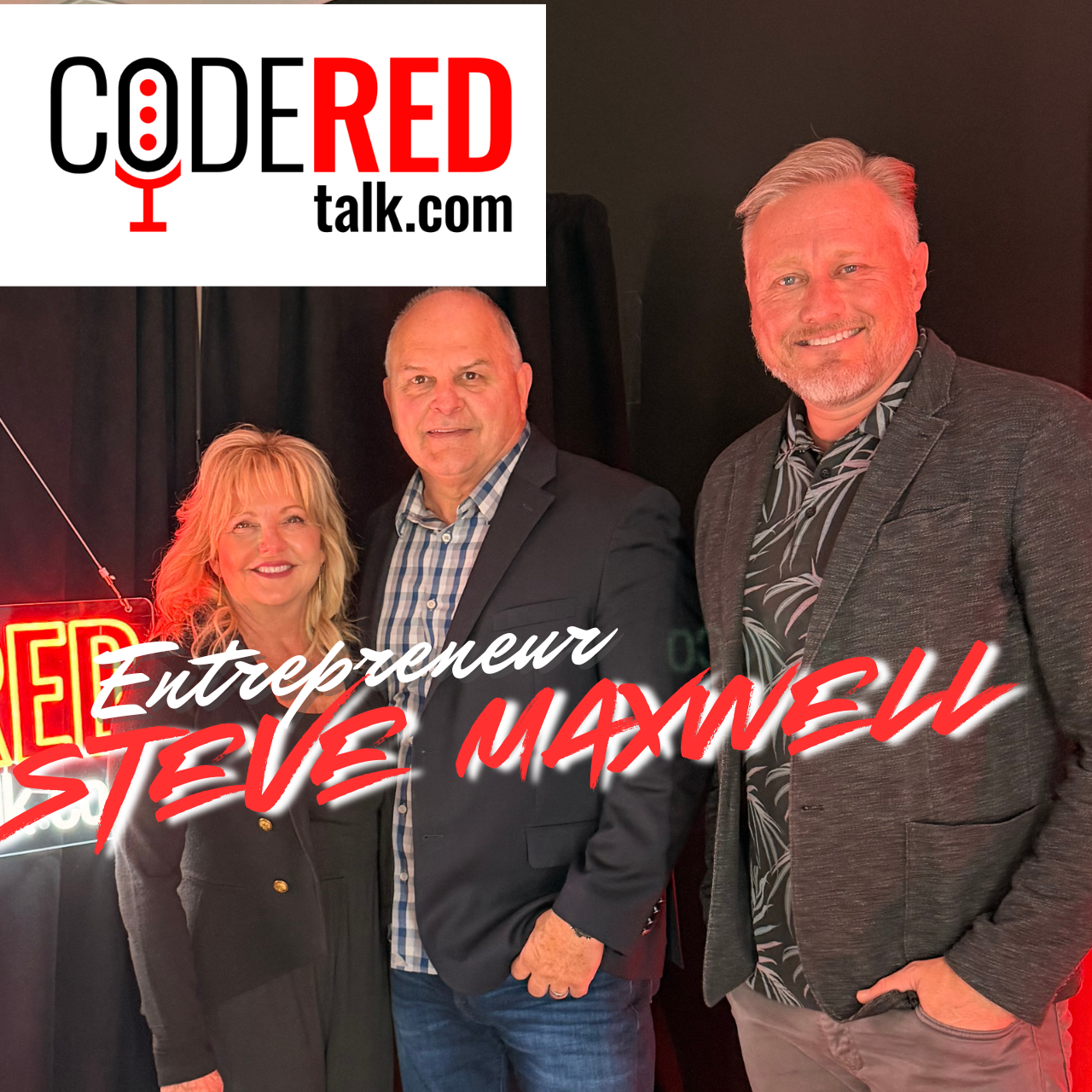
Episode Transcript
[00:00:30] Speaker A: Pastor Tim Anderson. Welcome to the welcome to Code Dredd Studio.
[00:00:32] Speaker B: It's always good to be with you, Zach.
[00:00:34] Speaker A: This is probably one of these episodes that I've had to do the least research for because we've known each other for how many years?
[00:00:41] Speaker B: A minute. June and I were just talking when y' all were on staff at church. It's been 25 years ago, and I probably only been at Clements five years at that time.
[00:00:49] Speaker A: Has it been that long?
[00:00:50] Speaker B: Yeah, I'm old. Wow.
[00:00:52] Speaker A: Well, give or take a year.
[00:00:54] Speaker B: It's close.
[00:00:54] Speaker A: Cole was born while we were there.
[00:00:56] Speaker B: That's right. That's right.
[00:00:57] Speaker A: And I remember when he had his surgery and all the folks from church came up to Huntsville Hospital.
Help us get through that season. It was just a great church family.
But I knew you even before that, probably more than you knew me.
I remember when we went to one of our first lunches together somewhere down in.
Was it Rogersville or somewhere, and had lunch.
[00:01:23] Speaker B: That would be west of us, right?
[00:01:24] Speaker A: Yeah. And just met up and you just kind of spoke into my life. And from that point on, you've just always been, you know, what is it? Paul says you've got a lot of teachers, but you don't have many fathers in the ministry. And so you've been a father in the ministry to me through the years, and I deeply appreciate that.
[00:01:43] Speaker B: That's the best language I've ever heard to tell somebody they're old.
[00:01:48] Speaker A: Well, I don't mean that, but, you know, reality is reality.
[00:01:51] Speaker B: I guess that's right.
[00:01:54] Speaker A: But, you know, we met at that point.
Julie and I, newly married, had begun traveling and evangelism, and therefore a season were with you.
What I thought we might do today is just kind of go through your journey up to the present day and then talk about icr, which you're currently heavily involved in.
But maybe start us out. How did you come to know the Lord?
[00:02:21] Speaker B: 10 years old, Friday morning vacation, Bible school. Franklin Scott.
I remember distinctively. All week the Lord had been speaking to me.
I didn't quite know what all that was. You know, I just knew that it wasn't normal. And the Holy Spirit was really tugging on my heart with what little bit I knew, but I'd been hearing because I was raised an independent Baptist, if you remember. I do, yeah. And I'll save my comments.
[00:02:47] Speaker A: No, I'd kind of like to talk to you about that.
[00:02:49] Speaker B: Well, what I'm going to say is going to sound harsh, and I don't mean it that way, so I'll start With the most positive thing, I say I was saved independent faith. But the longer I stayed in it as a teenager, the legalism that I saw.
And I'll just stop there. I don't want to sound condescending.
[00:03:08] Speaker A: No.
[00:03:09] Speaker B: Because again, I was saved in it and maybe saved from it, too.
And I have strong brothers who are pastors of independent churches that are just wonderful men. So that's not a shot at anybody.
[00:03:21] Speaker A: Nobody in our context really knows what. Not very few know what that means. We've got one very healthy historic Independent Fundamental Baptist church, and that's changing. That's Trinity Baptist. I don't know if you know Pastor Mercer over at Trinity Baptist.
[00:03:38] Speaker B: I do know of him.
[00:03:39] Speaker A: He's got a great reputation. The church has done well. We have several of our people whose kids go there. And independent just means they're not associated with the convention.
[00:03:49] Speaker B: That's right. That's right.
[00:03:50] Speaker A: But at the time, I think in the 70s and 80s, it became something different.
And at one point, it was greatly needed when the Southern Baptists were going, you know, had Baptist convictions, but they were also kind of drifting toward the left. And so the Independent Baptist emerged as an answer to that.
Now, historically, I think, just like any movement, they had things they struggled with. Legalism that you were mentioning earlier, and maybe some tribalism that we're kind of the only ones the Lord's really working in. But in spite of that, they had phenomenal preaching, evangelistic. They were soul winners.
To this day, we've joked around about it some.
I've still got the Hiles Church manual. You might have given that to me back in the day. I don't know.
[00:04:41] Speaker B: I didn't give it to you. But one night when Sherri and I were over your house having dinner with you and Julie one night, you and I, if you remember, got to cutting up about some old stuff in the past, you know, and you showed me a lot of stuff that was interesting, to say the least.
[00:04:54] Speaker A: I'll break that thing out and go through it.
[00:04:56] Speaker B: Think.
[00:04:57] Speaker A: If only our Southern Baptist leaders could be as clear on the steps by step how to do something as that manual was. I mean, if it was bus ministry, he would tell you what to wear, how to pick them up, you know, everything, and just articulated the step by step. Any fool could pick it up and
[00:05:20] Speaker B: do it, you know.
[00:05:21] Speaker A: And that made it the largest churches in America.
Howell's church was Hammond, Indiana.
[00:05:28] Speaker B: That's right.
[00:05:29] Speaker A: And was the largest in America. It was Gregorian, you know.
[00:05:32] Speaker B: And then to fast forward, you got the David Jeremiah's that come from that.
[00:05:36] Speaker A: I didn't realize that.
[00:05:37] Speaker B: Yeah. And so his part of his whole ministry integrity or testimony has got to do with that. I had no idea of that. Yeah, he started.
I don't want to be quoted literally, but I know he started in that area. That's cool. I mean, obviously some of the best preachers, as you said, come from that Sword of the Lord ministry all that.
[00:05:55] Speaker A: Well, you know, I reference Sword of the Lord.
It was the podcast of its day.
You know what we're doing in podcasting now, just talking about what's going on in the church community and all these things.
At its time, that was the cutting edge media was newspaper and they were getting the word out. You couldn't go into an independent church, and a lot of Southern Baptist churches, you would go into and see a stack of Sword of the Lords on the front pew, and they would just hand them out after service, and you would read great sermons and, you know, catch up on what was going on.
Falwell came out of that liberty, came out of that movement here in the Jacksonville metro area.
The man who led Jerry Falwell to the Lord pastored here for many years, actually just passed away about three years ago. And he was over, I think, at Westside Baptist over in Jacksonville.
[00:06:52] Speaker B: Oh, yeah.
[00:06:52] Speaker A: And so I got to. I did a funeral with him one time, and I got to ask him, what was it like, you know, because Falwell, Jerry Falwell was a teenager.
And so I said, you know, what was it like when he came to Christ? Did you know he was going to be a leader? And he said, yeah, he said he was before he was saved.
The little boys followed him everywhere he went after he got saved. Nothing really changed. They just followed him in the church. You know, he just was an influential individual.
And so for the south, you know, I kind of belabor the point because what they produced in leading you to Christ, there's so many folks that to this day, you know, you'll see the clips, and sometimes they deserve to get picked out a little bit. I get that. But I think it's important just to remember that they did do a lot of good at a time when we needed it.
[00:07:47] Speaker B: They gave me a strong, just Bible education. All the stories of David, Goliath, Jonah, Noah, Abraham, all the tantamount foundational stories I learned in Sunday school. Guys like that, nobody on this podcast would know
[00:08:04] Speaker A: John Rice.
[00:08:05] Speaker B: Yeah, but I'm talking about Franklin Scott hewlett and Howard LeMay, who led me to Christ, who discipled me. I didn't know what the word meant back then, but that's what they were doing.
And my dad traveled or worked a lot and so I didn't have a father a lot of the time. So they became my father. So you know, nothing in me is condescending toward that.
I just have great respect for them. Great respect for them.
[00:08:28] Speaker A: You grew up, came to Christ at 10, grew up in the faith, but you were called a little later. You weren't called like as a 17 year old boy, were you? Or did you sense any kind of drawing toward it?
[00:08:41] Speaker B: No, no, I was the least likely guy. Man, I laugh when I look back at all that now. Of course, as I said, saved at 10. Grew up in my teenager years in Madison Street Baptist Church right there, right off the Square in Athens, Alabama and then started dating at 16.
And a lot of things I shouldn't have been doing at 16 or 17 that I'm not proud of. But it was when I was 18 when I met Sherry and Jesus and Sherry changed my life period. We've been married 58 years this year, this August. And so then I started after high school, college, then went into work for Monsanto there on Highway 20. My brother in law got me a job there, stayed there six months and then Saginaw gm, Delphi was blowing and going back then got a job there and worked there for 20 years.
And during my 20 years of being in secular employment there at Delphi, my last eight years I was bi vocational pastor teaching Sunday school. Grew up. My home church at that time was First Baptist Athens, Dr. Fred Lackey.
I got to be his pastor for the last four years of his life and buried him.
So bittersweet for me.
But Brother Fred discipled me. Every Tuesday morning, 5am before I had to be at work at 6:30 I would get to his office, they're all square from five to six and then leave his office, go straight to the plant down 31 as you know, well south and clock in at 6:25, start towards 6:30 and get off at 4 and go home, be a dad, be a husband, be a ball coach, whatever kids need me to do. And then right after that is when I really sensed the Lord calling me into ministry and didn't even know what that was or meant. Just I knew something was I was anxious about about it. Then talked to Brother Fred, made all that clear. And then he said let's just make you. Let's put your name in the pot and put it out there and let's see what Happens. And I was like shocked. I couldn't believe it.
But then the story that I love to tell the most, that I'll never forget, was when I was going from church to church, if I could teach my Sunday school class and still get to the same church, get to that church in our Athens area, I would always do that. But every once in a while I couldn't. But they made the huge mistake at first, Athens, to ask me to teach a college and career class. And I didn't want to do it, but felt compelled to do it. You know, they have a way of making you feel guilty if you don't.
And so I said yes, reluctantly. And I'll never forget the first Sunday, Sunday morning in there.
The guys, the guys asked me about Saul.
And I said, who?
And they said, king Saul.
I didn't know King Saul. I didn't know. I knew of Saul of Tarsus. I knew a little bit of that, but I just didn't know the Saul of the Old Testament, King Saul.
And it embarrassed me so bad that I wept. I held it back in front of him, got home, got my commentaries out, done all the studies I could do, and bless God, I knew who Saul was the next Sunday.
And I said, now act like last week didn't happen.
Let me answer Yalls question today you've
[00:12:02] Speaker A: got to be a week ahead of them.
[00:12:04] Speaker B: And I still see a lot of those guys now they're serving the Lord, different areas, but they still say, hey, here comes King Saul.
So said all that to say Brother Fred just was foundational in my ministry and helped me tremendously. And of course went to school for seven years at night working, trying to do everything a father, husband, dad should be. And then Ben Edmondson, our director of missions, called and said, would you consider talking with me and having breakfast with me? And let's talk about a church that I want you to pray about. What scared me?
[00:12:37] Speaker A: You know, before you get into that, let's talk a little bit about.
Don't you think I observed this? I think I've heard you talk on it before.
That the time working just like Everybody else, a 9 to 5 job, you know, clocking in, clocking out, getting them going to church. Don't you think that training helped you to relate to the average person?
[00:13:02] Speaker B: Yeah, thank you. That's a great question.
So I think one of the things that helped me in my whole entire ministry, you know, for 30, almost 35 years of being a senior pastor, was I never forgot those bi vocational days.
What you just asked is so True. And I filtered everything through how I would ask a person to serve because I already knew what they would.
But I also knew this, that if you check the record, especially in the Old Testament of the Lord, he always called busy people, he didn't call slackers, he didn't call people getting things done, he always put more on those. That was getting a lot done already. He never went to impotent people, he just didn't do it. So Brother Fred knew that long before I learned what he was doing, he knew that. And so when, when I started pastoring. And then here I am working 55 and 60 hours a week. You know, you know our area real well. So you know, you know where Delphi was located. So I'd pull out, hit 31, go hit 20, and I'd head straight to Huntsville Hospital to make a hospital visit, you know, for somebody that had surgery that morning or whatever. And I remember in a little S10 truck that I owned at that point, changing clothes, going down Highway 20 just to get presentable before I would walk into the hospital. I've never forgotten that. And you're right, it prepared me, it prepared me to identify with the average lay person so well, and it has served me well for all these years.
[00:14:29] Speaker A: I've noticed in staffing when we bring somebody in who went through Bible college, went straight into seminary, got their master's degree, and then now they're taking their position as an associate pastor or youth pastor, whatever it is. But they never really had to work a regular job and prove themselves in what we would call the real world.
They're just missing something. If I can look over a staff and find the people who really got their stripes out in the real world, they didn't have to do church work, but they had proved that they could make it in the real world. They always make the best staff members and they have less drama.
They know that sometimes you just got to go and get along with folks.
And two, we've seen this before.
The person who doesn't understand, if they work a church job and they have comp time, they can keep people out till 11 o' clock at night and they can sleep in the next day. But the average person has got to get up and go to work.
[00:15:34] Speaker B: That's right.
[00:15:35] Speaker A: And so that wears on people over time.
And I say that because we've got a couple, we've got a couple of paper mills here on the island and a lot of blue collar type jobs. And I don't want people to think that they've dodged A bullet of the call to ministry, because they're working those type of jobs. Sometimes those are the best ministers, best preachers and servants of the Lord.
[00:16:01] Speaker B: You make a great point. I shared with your staff this morning. Morning.
Delaney would remember this, you know, I was just talking about how that the average, maybe not the average, but many pastors and staff members in general have the tag given to them that they're lazy and they've earned it.
To your point, I've had staff members in the past that would do exactly what you said. It would be holiday season and they would be. Wednesday nights would be choir practice, you know, and they would keep them out till 10:30, 11:00'. Clock. And then, then that dude had the nerve the next day to send out an email and say, man, it was great. It was good to be able to sleep in this morning. Most people got up at 5 o' clock to go to work.
[00:16:38] Speaker A: It's offensive.
[00:16:39] Speaker B: Yes. And then he wonders why he can't build community with them, you know, so I'd have to, you know, as a pastor, you'd have to talk to him and say, look, you can't do that, man. And then I would be the bad person because the next time I would make him show up an hour early, you know, but again, I had my job to do and it would breed contempt, it would be breed favoritism, and you just can't do that.
[00:17:00] Speaker A: At the same time, when you were called in the ministry and working at Saginaw, was Dusty McLemore there at the same time?
[00:17:06] Speaker B: No, he was at Steelcase. Yeah. Dusty and I were the biggest enemies back then. Now we're the best friends.
No. And, you know, now I'm a member of his church.
[00:17:16] Speaker A: No, I didn't know that.
[00:17:16] Speaker B: Yeah, I'm at Lindsay Lane. Yeah. And I made it really clear, though, when I joined, when I told. When I told Andy John, I said, I want to make it really clear.
And I've shared this when I preached there, you know, for ICR or something, I'd say, you know, it's the greatest church I've ever been in outside of Mount Ipatra for 30 years. And I said, I want your record. The record is so clear that I joined this church under Andy John's leadership. Not know some aftermores.
Well, you know, I mean, Dusty and I are great friends.
[00:17:41] Speaker A: I think. I think that folks in that area, in particular, people like me who've drifted further south, but you guys still had an impact on my life.
[00:17:50] Speaker B: Life.
[00:17:51] Speaker A: I count myself very fortunate to have men who made it through ministry that stayed with the stuff, that were faithful in their calling, that didn't have any kind of scandalous issues. None of them are perfect, but never were disqualified in their calling. And we're able to look at you guys, both of you, and so thankful to have men like that that we can point, because there just aren't many of you.
I mean, have you thought about how few people make it 20 years in ministry?
[00:18:22] Speaker B: Yeah. Well, I humbly say I'm just grateful for the grace of God because I could have been me any given time along the way. Amen. And I'm so thankful. I'm so grateful.
[00:18:32] Speaker A: And we're thankful as well.
[00:18:33] Speaker B: Gave mercy in those areas. Well, you and him both. It hurts the body, obviously, but then you got the countless people that are in the fallout of all of that. And you know what I mean by that.
So that's a sad situation for sure.
But, hey, the devil, Junior Hill told. Probably he's told all of us this, but I'll never forget sitting in the green room of my church one day, this was probably five or six years before he passed. He looked at me and he said, tim. You know how he would talk. He said, tim, the devil will wait on you a long time.
And I'd heard that before, but hearing it from him at that stage of his life, you know, just really profoundly impacted me.
[00:19:16] Speaker A: Well, and he was another one that made it faithful to the end, did he not?
Alabama was blessed to have hearts for Alabama.
[00:19:25] Speaker B: I still talk to Ms. Carol today.
[00:19:26] Speaker A: Did you really?
[00:19:27] Speaker B: Not today. But to this day, I still talk to her.
[00:19:32] Speaker A: We got to the point where you said the Dom reached out, talked about a new work.
[00:19:35] Speaker B: Yeah. He shared with me that he was his vision during his time there was to plant two churches on east and west of the county.
Oak Grove, which Ross Clemens pastored for. He just retired. Now he's the new Dom in our area and he'll do a great job. But he. About a year. And then a year later, the association planted Clemens Mission. And I was my first pastorate during that time that had been there for three and a half years. And you remember, I'm sure, at Concord, but couldn't have started in a better place. I mean, it was incredible.
They taught me, first of all, how to deal with death because I did my first funeral there to a man that I did not know. I got there and within days of getting there, I had to bury my first guy that had been sick a long time. But, you know, I had not merged into that world.
So that's not easy for a guy. I've been doing it for 30 years, but still when you are just starting, you know, it's daunting and so. But over the course of that three and a half years, I dealt with a lot of that, but then had the best deacons, had the best people around me, loved our kids. I could not have started at a better place.
And then three and a half years later, when he called at that point to ask me would I consider talking to him about New York. And when he started on the west side of the county, I was intrigued to say the least, but afraid and scared and would be afraid of anybody. That wouldn't be.
[00:21:01] Speaker A: What year would that have been?
[00:21:01] Speaker B: That would have been 91.
[00:21:03] Speaker A: So that was before church planting was cool.
[00:21:05] Speaker B: Yeah, for sure.
[00:21:06] Speaker A: I remember kind of when that became the thing everybody wanted to do. And you couldn't find a student pastor because everybody wanted to plant a church. But this was when you entered into that with a lot of fear.
[00:21:17] Speaker B: Oh, I sure did. Because it was unknown, uncharted grounds. And I remember reading what Paul said in Romans 15, that I wanted to start a church and cast a church where no other work was ever known and built upon the work of Christ. And here's the things I would hear. And again, I'm not being critical. This is just the truth.
When I first started talking about it, all I heard was, well, you know, the other denomination that's prevalent in that area, the Church of Christ. And again, I'm not being critical, not being ugly about it. It's just the facts. And I was told that it would be a dead work from the start. It would never flourish, it would never do anything. And part of me, the competitive nature in me took over a little bit.
Yeah. And I thought, you know, but it can, you know, maybe nobody's ever tried, but it was horror story after horror story. But I just felt like. And Sherry, of course, Sherry went to Clements High School. And so all those years, you know, here she is now, thinking, we're going to plant a church in an area that I went to school, I grew up in all my life.
And that's what she dealt with all her life. You know, the school was run by that denomination.
So then fast forward, the church was planted. The Alabama Baptist Convention put a state convention, put a double wide trailer out there. First Sunday we had 38 people.
[00:22:32] Speaker A: I remember. I remember when it started.
[00:22:34] Speaker B: Yeah. And you know, my first calls, there was a sign that said Clements Baptist Mission. And they thought it was A soup kitchen. Literally everybody thought it was just a shelter, you know. And I would get these calls about when we were serving food. And I would say every Sunday morning at 10:30, 10:00', clock, 10:30, whatever time we start, I said, and Wednesday night feeding is going to start soon, you know. So I just tried to take it and run with it, you know, and you know, take what they would give me for ammunition to build.
And then after we got growing, got established a little bit again, I'm still bi vocational, as you know. And then it just started growing. It just started growing and growing. And the next thing we knew, we had 80, we had 90, we had 100. Then we needed a building. And then enter Carpenters for Christ. You know, the first group came from Texas, second group came from Missouri, and the third group came back from Missouri, a different part, I'm sorry, Bartlett, Tennessee.
[00:23:30] Speaker A: The third group, they would just come in and be your construction.
[00:23:33] Speaker B: They had, yeah, they had ministries that was called Carpenter for Christ Ministries. And they had lead guys that were just carpenters, that was blue collar workers, as you said, but knew how to build houses, knew how to build churches. And then they had all these volunteers, which, you know, it's good and bad, you know, because then a lot of the churches, you know, that they would come in and build in different places, maybe never grew outside of that, so they didn't have other town issues to deal with. But then when you get ready, when we get ready to make second phase, third phase, fourth phase, then it was all these issues we'd find. But our guys at that point, the Lord would always bring the proper people. They'd figure out what to do because plans are drawn on a paper sack, man. I mean, we didn't have architects, we didn't have all that stuff, didn't have the money to pay for it.
So then we built our first building, then a second building, third building, and finally the last building was our 1200 state alternative that is thriving today.
[00:24:29] Speaker A: That was kind of the dream.
[00:24:30] Speaker B: It was. But nothing in me believes it will stop there. It will continue to grow.
The Lord gave us a good name and I'm grateful for that. You know, I always tell young pastors, everybody's got the good news, but not everybody has a good name. And we had both and God honored it.
[00:24:48] Speaker A: Well, your calling and my calling were similar in some ways. In some way that we both were ambitious people, both poured our life into it. But you had started new work and what you built is similar to what we're at now. But I'VE always taken very established churches, 100 year plus churches. So this is 165-year-old church. When we came in and to look at it and think, I feel the same way that you feel about this church that you started, that the best days of first Fernandina are yet to come.
[00:25:21] Speaker B: Absolutely.
[00:25:22] Speaker A: And I can't imagine pastoring a church. I didn't feel that way about it.
[00:25:25] Speaker B: That's right.
[00:25:26] Speaker A: You know, but. And then for a season.
So you built it up. When I came there.
I'm trying to recall about what size Clements was.
Because you were in the. I came when you really. I started when you were meeting in the gym and y' all were running several hundred by then.
[00:25:47] Speaker B: Yeah, we wound up running three services in that gym before it was over. Started with one and then added two more. Wound up with three services and we stayed in that gym for about four years.
[00:25:57] Speaker A: Yes, three. Sunday morning. Yeah.
[00:25:59] Speaker B: The last two of those years. The last two of those four years we were in three services.
And how, you know, God fees based on supply, demand. You know, we're at that point right
[00:26:13] Speaker A: now where we've projected out. We're about 150 away from needing three now.
[00:26:18] Speaker B: Yeah.
[00:26:18] Speaker A: And it's not because. And we may have solved it. Some of our deacons cleared some land that we may be able to use for parking. So maybe we bought ourselves some time. But you know, eventually we're gonna have to go to a third service or build or something. And I don't want to build. I don't think we need that right now. But. But that's the kind of thing that in this day and time you've got a lot of churches that have closed and combined. And so it's not unusual to have churches that either need to start new campuses or go to multiple services at that particular time. I didn't know. I couldn't tell you two churches that were in three services. I don't know that I knew of another one.
[00:26:57] Speaker B: Well, we used that GM to the glory of God. Man, we got so much.
The only negative was our kids had to give up the gym. You know, through the week. They couldn't play ball in there.
We did the best we could to give them half the side of it, you know, move chairs and set up all that.
But everybody. I would say this about Clements. They always got it.
In the 30 years that I was there, never. Church fight. You know, we had disagreements because we're human, but nothing that ever caused us to drift from the vision. Supposed to be doing the best deacons you know, of course, if we didn't have good staff, that was my fault. You know, it wasn't anybody else's, but our deacons were second to none and still are to this very day. Incredible men, men that. I love them all. I mean, I love them all.
[00:27:41] Speaker A: What do you attribute that to?
[00:27:43] Speaker B: Relationship building.
And you are, too. So you can understand this. I'm highly relational. I just demand to be.
To be heard. And I don't mean that in an arrogant way, but also demand to be understood.
So, you know, my biggest gift is exhortation. I'm an exhorter. And if you tell me your heart's broke, I'm going to loan you mine. Yours gets fixed. If you tell me 10 reasons why it can't be done, I'm going to tell you 10 more while we can. So I just refuse to accept no for an answer. So with that said, I just.
I get in the grid in the good way and I make people. I.
I'm going to love you until you love me. And if you don't, then I'll never stop. You may decide to go a different way, but I'm going to continue to do that. And so I don't take any credit for it. I'm just saying that to answer your question, I think kind draws to kind.
And there's only two spirits in a church, holy and unholy. And I've learned through the years that the holy always finds the holy and the unholy always.
And you know, that's true, too. And when a person comes in and I know they're of the unholy spirit, I already know who they're going to go to. Already would know that. And our deacons, we had a good filtering system. We made it clear up front what was expected as New Testament deacons.
[00:29:01] Speaker A: Unpack that a little bit. What did you expect if somebody was going to be a deacon at Columbus?
[00:29:05] Speaker B: A servant, a servant leader. You didn't tell them what to do. You showed them how to do it. And we expected them to, you know, through the years, they would change their model because I didn't care how they did it as long as they got it done. And so they were the deacons that would show up and minister, because again, going back to the early days when I was still bivocational, they would have to really, I really had to depend on them, you know, because here, I mean, I'm doing what they're doing, except I have responsibilities they don't have. So I would sit down with them and Just, I remember two guys, especially Jimmy Downs and Tim Page. They were the first two guys still deacons there today, which tells you they're a little old, like I am as well, but still two of my best friends.
Every Monday night we'd have outreach. You remember those days? And then we'd come back from outreach and here again, I had to be in the plant at 6:30 the next morning if I didn't go in early. And they had to be on their jobs at 6:30 or 7:00'. Clock. But we would set up there after we get back from outreach, which would be probably 8, 8:30. And we wouldn't leave my office till midnight. Most Monday nights we would flesh out what we felt like the church structure should be like. We would just open our New Testament up, we'd bounce things off each other, just work through the scriptures so that time allowed our hearts to really get knitted together, which is why they're still that way today.
And then those two, to totally give credit where credit is due, those two took my heart. And every deacon that we brought on, they sat him down and talked him through that process and said, you have to commit to this dream, to this vision, you have to commit to the way we do it here. If you want to do it a different way, that's okay. But you're not going to do it that way here.
[00:30:48] Speaker A: Right.
[00:30:49] Speaker B: And it sounds authoritative.
[00:30:50] Speaker A: It does, but it will. It was legitimate and it was a beautiful thing. And I think so many churches you either get well, you think, well, this guy over here has got a lot of money, maybe he'll give a little more if we make him a deacon, or maybe this guy over here is not doing anything. Maybe making him a deacon and get him off his tail and get him serving. That was not Clement's approach.
It was.
You found guys who had the, who were excited about ministry, who were serving already. And you set a very high standard. You know, it was. If they weren't giving, that conversation would happen for sure. And it normally wasn't you that had to have that conversation.
[00:31:29] Speaker B: No. Which goes back to my Monday night times with Jimmy and Tim.
But those guys held the standard for all the other guys. And one of the things that helped me the most was when it was time for some house cleaning. You know, I didn't, I mean, I would do it and they knew that, but I didn't have to. They would do it. And that took a lot of time and weight off of me. And they were, they would take bullets then, would take bullets now.
I talked to Jim Page last week, talked to Jimmy Daniels probably twice a month.
They was over at a house on Easter. So, I mean, I still have great relationships with these guys. And so there's tons of new ones on there now. And they have great respect for those older guys that always set the bar.
[00:32:11] Speaker A: I've often thought that it would. And you probably have. I've probably just not gotten that PDF yet, but somewhere, I hope you guys have written down your processes and I would love to see that.
[00:32:24] Speaker B: We used to do a lot of deacons training because, you know, we would get a lot of stuff from other places as well, obviously, but then we would really make it fit who we were. And then our guys would go, those two and. And a couple more would go and make their rounds with me when we would be asked to come and do a staff retreat or something, you know, or a deacon retreat, rather. And we love to do it. Yeah. So a lot of that stuff's in print, but it needs to be polished up and. Yes. So you give me a good idea. Thank you for that.
[00:32:52] Speaker A: Let's talk a little bit about, you know, you would have, you would out punch your coverage with speakers, preachers that you'd bring in.
And it was people that typically were in what in that day would have been considered mega churches. And when you were running 7, 800, you would bring in these pastors of these very large five, 7,000 member churches.
And that raised the bar.
It always impressed me that you didn't try to bring in people that weren't as good as you. You always brought in people that were the best of the best, for sure, you know, and it just raised the bar. It challenged you, it challenged everybody around you.
But in the midst of that, you met Wild Bill Stafford and that led to what you're doing today. So before we get into icr, how did you form your relationship with Bill Stafford? And if people don't know him, I just can't say enough.
[00:33:51] Speaker B: We'll put a link to YouTube him. Man, you gotta YouTube him.
[00:33:54] Speaker A: There's just nobody like him.
[00:33:55] Speaker B: No, no, no.
Well, going back to the. We call that glory in the church Bible conferences, you know, I would go to real evangelism, Baby Smith, Johnny Hunt stuff. And Johnny was a dear friend of mine then and now.
So I just wanted to model. I love that, you know, and it was something I would take my staff to every year. And then we got to build relationships with their staff members that would.
From a senior pastor's perspective, I knew that if I could put My guys around those guys, they would just get better, and it would save me a lot of work on the backside of trying to tell them what to do. And they caught on to all that. Then I had Alan Taylor teaching my education guys how to do Sunday school. And there's no better leader out there than Alan Taylor. None. And then Dan Dorner, who was over the financial side of the ministry. No better man anywhere. Jim Law, no better guy anywhere. All those guys. And on and on.
Ken Lasseter was over at the missions department at that time.
We had help.
We had incredible excellence teaching us that we got just from going to those conferences that we would leverage our relationships with throughout the year.
So then whatever year it was, we started that I just felt like, you know, nothing like that's done in my area. And so I would reach out to them, you know, try to leverage my influence and get those guys to come. And what I found out is they were more than willing to come, you know, and then I made sure that I took care of them financially. You know, I know you do the same way.
And those guys, you know, if you're going to ask a guy to leave his state, get on a plane, fly, spend the night somewhere, the last thing, you know, need to do is discourage him with an envelope.
I always said it like this. I want him to go back home. And if he missed something, when his wife would open that envelope or see it, she would always say, you know what?
They loved you being there.
Are you going back next year? That's what I wanted.
And I realized there's balance in all that. But still, nobody ever turned me down because I took it seriously, taking care of them. And so. And so Homer Lindsay taught me that when you're making a decision as a senior pastor, let's say whatever you're trying to do, if it's going to cost $10,000 to barely do it, and if it was, and if you could do it with excellence for 16,000, then it's a $6,000 decision. It's not a $16,000 decision. It's a $6,000 decision. And is Jesus worth the difference? Of course he is. And so, again, there's balance in that. I understand that. But I took the least common denominator, the and thought Jesus is worth the difference. And then I would go out and ask different people to help me support the difference. If the church could take care of the 10, then I would find different people to help me take care of the six. And they were always ready and willing to do it.
So it just built and grew from that point, and we became known as that type of church, you know, and it served us well in all the other areas of doing that.
[00:36:51] Speaker A: It widened your reach as well. Absolutely.
[00:36:53] Speaker B: Absolutely. Man, I wouldn't be sitting here at this table with you today if it weren't for those decisions back then and the favor of God back then that gives me favor today. Then you asked me how I met my mentor, brother Bill, Dr. Bill Stafford, real evangelism. So he's preaching there one year, Sherry and I sitting on the balcony with our staff.
And I couldn't tell you what he. Because he preached on the whole Bible to try to preach, you know, it wasn't one subject, was 20 subjects, you know, and he wore them all out. Have you laughing, crying, convicted, all at the same time, as you well know.
So on this particular year, I had. I had paid attention to how they brought him in, and I knew how they would take him back out.
So as he's wrapping up within his first five minutes or last five minutes of that particular sermon that day, I told Sherry, I said. I leaned over, I said, I'm going to slip out. I'm going to meet him. She said, you can't meet him. I said, you watch me. I'm going to find him. And so I made my way to the foyer where the door. I knew they'd bring me out of the foyer, and I already had my name written down, my phone number on a piece of paper. And I just walked up to him when they were bringing him by, and the security guy tried to stop me. I said, would you just hand him this to me? And then Brother Bill, just the favor of God, said, what do you got, son? And I said, would you call me sometime? I said, I would call you, but I don't know your number.
And I say, he's stuck.
I don't know if it was two weeks, it was no more than four weeks. It was no more than a month went by. I get a call one day, don't have the number, obviously, and wasn't about to turn one down because I was hoping he would call. And sure enough, that day, it was him. And he said, what you want to talk about? And of course, I had to get my breath and I had to catch my. Because I respected him that much. And I finally got it out what I wanted him to do. And it was just to come and do a Sunday. And we set a date, took about a year down the line line to get him. And then when he came, him and Miss sue came in their motor coach, and we had a place set up for them right outside the gym where they always park it, which was his designated spot through the years, because he wound up coming every year, sometimes twice a year.
But I attribute everything I am today to him and Brother Fred because.
And there's others that's poured into me greatly. But Brother Fred taught me how to be a pastor. He taught me work ethic, and Brother Beal taught me revival, how to walk by faith, how to trust God on levels that nobody else is trusting him on or willing to trust him on. Then you got the Johnny Huntz, who just taught me passion, just passion, just pure passion. It's. So I'm a product of a lot of good people. You are. That Jesus brought into my life.
So then Brother Bill, after year after year after year, getting to know him and Ms. Sue, they became just our parents, so to speak. And then I'll fast forward then let you take it where you want to take it. The question you're going to ask now, but the first year, he asked me to go to Drakensberg, South Africa with him. I had no idea that he was asking me for the reasons he was asking me.
So who turns him down? You know, I couldn't believe that I've gone from meeting him in a hallway to him asking me to go to preach with him in South Africa to be part of icr.
And so to say it was a great trip, was, don't even touch it. But we're home about two weeks later, I get a call from him, and he wants to talk and. And he wants to meet me somewhere. And I couldn't really meet him, but he wouldn't take no for an answer. And then when I went to meet him and I come back and I told Sherry what he wanted, she said, he wants what?
I said, he's asked me would we consider praying over being his successor, that God had already told him.
And, Pastor, I can't tell you the fear what came over me. I just couldn't tell you.
And I said to him, I said, brother Bill, if God's told you that, don't you think he'll tell me? And in his typical way, as you would know, he said, son, he already has told you. You just hadn't caught up with it yet. That's how much he walked in faith.
And it took me a year. Sherry and I just prayed over it for a year. We just talked through it, prayed through it, talked through it, prayed through it. Then after about a year, I told Two of my trusted men hadn't told my staff or anybody.
Two of my trusted men, they helped me pray over it. Then I told the staff, then I told our deacons, then I took it to the church. And then when I did, I just told them. I said, you know, told them what had happened. They knew a lot of the story, but I filled in the details.
And then I said, for me to do this, it's going to take you all because the dynamic that I've had here for all these years will change.
And you all have to know that I can't do it without you. And I wouldn't try.
And I just kindly preached it around to the point to where I asked them, could they affirm it.
And Pastor, they stood and applauded for probably three minutes. And that's an eternity, you know, in a church.
And I was just humbled. And then from that point forward, the rest is history.
[00:41:59] Speaker A: Back up a little bit. Tell us about where ICR began.
[00:42:03] Speaker B: Manly Beasley. So another, if the younger guys today don't know that name, it would be well worth your while to Google him as well.
Audio Sermons has a lot of stuff I throw in him as well. You know, the ironic thing is I never got to meet Manley. I heard him preach.
And now, of course, as I took it over, you know, he had already passed. But I went out and found everything he had. I got all his notebooks, all his faith work notebooks. You know, have every one of them. I worked every one of them. I know him all by heart.
But he was a great man of faith, a great prayer warrior and a sickly man. He was a Southern Baptist evangelist from Texas.
Died at 58 or 59 years old.
He wasn't in the 60s.
Brother Bill would often be joined by others to prop him up to preach. And then the Lord would just preach in him and through him, like something he had never seen.
[00:43:00] Speaker A: It really was. And I don't know if you recall a story or two. Do you remember about him stopping the rain?
[00:43:07] Speaker B: I do.
[00:43:07] Speaker A: Do you remember that? Tell us that story?
[00:43:08] Speaker B: Well, no, I don't. I just remember others talking about it. You probably know what happened.
[00:43:12] Speaker A: My understanding, he's praying.
You know, people don't associate this sort of thing with Southern Baptists, but I think we're missing something in that because our church today, you've met them, you know them, we've got a large contingency of people who came from more of a charismatic background.
And so you look around one day and you've got a Bunch of former Catholics and a bunch of former charismatics and a few Calvinists and a few, you know, John MacArthurites and all these people together, and you're like, what in the world is this? You know, well, this is our church.
But it's not altogether different than what Southern Baptists once were.
And Manly Beasley was in Russia right after the Iron Curtain fell, and he had the opportunity to do a crusade over there.
And they set up the stage. They had sound equipment and all this electronics, and they had to cover it up because it was pouring down rain.
So there's just as far as you can see, hundreds and hundreds of people out waiting to hear the gospel. And my recollection of it was the water was up over their feet, coming up to their knees, and they wanted to hear the gospel, but they could not uncover that sound equipment.
And so Brother Manley, sick as he was, he went and he fell down on his knees with his team, and he said, lord, we need you to stop the rain. And the story was, whether it's true, embellished, whatever. This is how I heard it was that the clouds just parted, and it.
The sun came down on that place until he finished his sermon. And when he said, in Jesus name, Amen, it fell down again.
He was leaving, going to the airport, and he had this rug that he had bought in Russia that he was going to take home to his family, and they forgot to charge him the proper tariff on it. And so he said, well, do you think I ought to say anything? And one of his team members says, you don't have to say anything, but don't expect it to stop raining next time you ask the Lord.
[00:45:10] Speaker B: That's the story I've heard. I've heard that many times.
[00:45:13] Speaker A: I love that.
[00:45:14] Speaker B: He also was the guy that if he walked up to you and said, hey, Tim, Zack, what are y' all praying about right now? And if you took over five seconds to answer, he would answer by saying, that's what I thought. Nothing.
What are you trusting God for? And if you. If you took five seconds to answer, he would say, that's what I thought. Nothing that you can't do yourself.
You're not depending on the Lord for anything. Everything's within your power to do in
[00:45:36] Speaker A: this generation, like you said earlier. That sounds harsh, but he could say that and you would weep.
[00:45:45] Speaker B: Oh, yeah. And not only that, Pastor, but for me today to look, I know you know me from a distance. I know me internally, and I know how evil and wicked, and I just know me. I know how strong my sin nature is. And for me to be entrusted with the ministry of this caliber. Today I pray to God I die before I ever lose the humility of it. Because I know its origination. And I know, of course, then when he passed away, you know, he told on his deathbed, he told Brother Bill, don't let it down, as you said this morning. And that's what he told him.
And he didn't, obviously.
But what I didn't know in Manly, I knew tenfold in Brother Bill. He was my daddy. I mean, literally, man, my daddy. From the man I met in the hallway, passing a note to him that he didn't know me from Adam to this day. And I buried him. You know, I went to Chattanooga to bury him. Me and Jim, Junior Hill. And so Paige Patterson was there. He had part of the service as well that day.
So I'm just humbled. I mean, I am absolutely humbled.
[00:46:59] Speaker A: I would tell people, if they want a good synopsis of Bill Stafford, if you could find the Caney Creek Revival series he did at Southeastern.
We wore those VHS tapes out, but that's a good example. You didn't listen to Brother Beal. You experienced it.
[00:47:16] Speaker B: That's exactly right.
[00:47:17] Speaker A: And it was a wonderful, well crafted sermon. I can remember, I could preach a sermon on the rich young ruler. Remember every point he made. Probably could do it word for word, but. So it was a great sermon. But there was just always more to it than just the delivery of the notes and the ideas.
It was.
He walked it, you know, he let it take over.
And you experience that and you can't. I don't know that you can fully get that through social media or whatever, you know, it was something about being with him that was really, really special.
[00:47:57] Speaker B: Those times in South Africa, in the Drakensberg Mountains, that I spent with him. We went there probably five or six years together in a row.
The things I learned from him at 5am when we get up and walk.
And the things that I learned from him in between the sessions.
Good quick story is he just got through preaching in the conference center there in the hotel we were in. We walked down to the bottom floor, we had dinner. This guy walks up to him. I'm sitting beside him. Sherry, several of us are at the table, and this guy walks up to him. He says, well, preacher, I just want to know one thing.
He said, are you living up to all that truth? You just got through preaching. Brother Bill had chicken leg in his hand, brawled in the other hand, never even broke stride. He Looked up at him and said, don't matter if I'm living up to it or not. Truth's truth.
[00:48:43] Speaker A: That's right.
[00:48:43] Speaker B: You know, and it was just the way he said it. And then he taught me things that he would just laugh about. He'd say, listen, son, if you're going to follow me, you got to watch me enter a room. I got to teach you how to enter a room.
I said, teach me how to do what? I want you to teach me to preach. Told him to teach me how to enter a room. He said, no, you got to enter the room the right way. And he said, just watch. Just watch me. And it would. And that ugly grin he had, you know, and he would just laugh and he'd say, are you watching? I said, I'm watching, Brother Bill. I'm watching.
[00:49:15] Speaker A: I want people to understand. So it was almost like an Elijah, Elisha type thing, from Manley to Brother Bill, Brother Bill to you. And so that they can kind of get. Because you would never tell this. I don't even know if you're comfortable talking about it. So if you're not, we can just cut it and move on.
But I want people to know that it did not pass to a lesser man when it came to you.
You've seen the dead raised.
Are you comfortable speaking to that?
[00:49:45] Speaker B: Well, I'll say this.
It did pass a lesser man. It did.
I would be afraid to ever deny that, because, again, I know me more than you know me, better than you know me. Now, when you speak of the dead raised, are you referring to the individual in the hospital? Yeah. Yeah.
No, I can talk about it, because her dad, you know, the father, Ted, who I still. I don't talk to him near as much today, but, you know, I think about that instance. A lot happened in Decatur Hospital.
Her name was Susan, and she had passed. She had been pronounced dead. We had been praying over her, obviously, for quite some time, but nothing like that had ever happened to me before, and it hadn't happened since.
[00:50:40] Speaker A: Did you know it was going to happen that the Lord revealed it to you, or were you just praying?
[00:50:43] Speaker B: No, no, I wouldn't say that. I just believe that it could.
And I guess for me, I saw the desperation. And I saw the same desperation in many parents through the years. I'm not saying less than that.
But that night, standing out when we walked in and just prayed over her one final time, the doctor then came in and began to tell the family that they were going to unhook her.
And then at that moment, Something in me said, pray again.
That's all I can tell you. And I would never take credit for anything. That's all I know.
That's what I can tell you. That happened.
And I looked at Ted, and there were several other family members there, and I just said, doctor, would you allow us to pray one more time before you ask your nurses to unhook?
And he said, of course.
So he stepped out and asked the nurses to step out.
And we gathered around the bed one final time. And Jack, all I knew to do was plead the blood of Christ over her, beg God to do a miracle in her life and ask him to give her an opportunity to make him known one more time.
And during that prayer, we started hearing machines go off. We started hearing beepers go off. We started hearing. Hearing things that we'd not heard before.
And we just kept praying. And then within a matter of seconds, you could hear the door fly open.
The unit that she was in. And the nurse was saying, would you please step aside? Would you please step aside? And we just moved the prayer meeting out into the hallway. I mean, from far from me, from me to Julie right now. And here's what I heard next.
She alive.
And then, of course, Ted just starts screaming, and the whole family just starts shouting.
We all looked over about the same time, and the lady that we had left moments later was sitting up in the bed, and she was flatlined.
She was flatlined.
And so, you know, Easter happened that day, know. And I've never forgotten it. And you're the first person that's asked me that in a long, long time.
[00:52:56] Speaker A: You don't talk about it much.
[00:52:57] Speaker B: I never talk about it. I never bring it up. Yeah.
[00:52:59] Speaker A: I would probably begin every sermon with that story if it were me. But you also. Another one that, you know, the stories we tell about you when you're not around.
A lady that described herself as a witch came to Clements one day. Can you tell us that story?
[00:53:19] Speaker B: Yeah, that was interesting.
[00:53:21] Speaker A: It was the other end of the spectrum.
[00:53:22] Speaker B: Yeah, for sure.
Yeah.
[00:53:25] Speaker A: We were.
[00:53:27] Speaker B: It was on a Sunday night, and she was on her way, so she said to Sarasota, Florida.
They all come to Florida.
And, you know.
Oh, I don't. I don't know, man. That was. That was eerie. That was eerie.
I believe she was possessed. I really do.
Her.
Not just her dress, but her candor, her personality, her fingers. And the dog that was in her car that I think was possessed as well, you know. Do I think that Christian people can be possessed? I do not, But I think that can be oppressed. I do. 100% do. There's a difference between oppression and occupation. You know, the darkness cannot live where the light lives.
So I'll just. I'll say this.
She opposed me.
And I felt like that all I knew to do was speak the name of the Lord back to her. And the boyfriend or the boy, the guy she was with, he wasn't quite as convinced as she was.
So I don't want to say a whole lot more other than just the fact that I was intimidated. But at the same time, I just knew the Lord was greater than me. We spoke, tried to speak life into her, helped her, got her on her way. And I got a letter back from her months, and she had cleaned up.
She didn't say she trusted the Lord, but she said that she was a better person today as a result of that encounter.
[00:55:07] Speaker A: That happens a lot of times. People get this idea that a person goes from.
[00:55:11] Speaker B: I'm surprised you remember that story.
[00:55:12] Speaker A: There's a lot I remember about our time together. But I remember so many times we have this idea that a person goes from deep, deep darkness to suddenly they're.
They're on the front row at a church praising the Lord. It's not always that way. Sometimes it is.
They can get freedom in that moment, but they still have to trust Christ and follow him on their own. And sometimes those kind of encounters gives them that opportunity. And that impacted me. We see a lot of that here. I don't know if it's because of the beach or what it is, but I've never seen it. I didn't see it in New Orleans way. We've seen it here, just real spiritual warfare.
But I learned that from a lot of those early Southern Baptist evangelists. Sam Cathy had a big impact on me in that world, and he and Brother Bill were friends through the years.
And so it's a good reminder, I think we can become so pragmatic and just what we can see and touch and feel and build and change that we forget the unseen world. And I think we're in a time where we can't afford to do that anymore. We're going to have to develop that theology of spiritual warfare and learn how to participate in it.
[00:56:28] Speaker B: Correct?
Because it's real. I mean, it's real.
[00:56:31] Speaker A: And I'm sure where you go, you go around the world with the International Congress on Revival.
[00:56:37] Speaker B: Let me share with you now what I do like to talk about.
Do you.
Do you know the story of what happened? One of my first years in South Africa, when we were in the bush. And my translator, who's now passed away, his name was Justin Chung. We called him Ba Chungwe.
He was asking me what I was going to preach that night. We were gathering wood and sticks to build a brush fire for that night. Just an old campfire meeting. And me and Wright Buchanan and other people of the church were gathering sticks, just passing time, trying to build fire.
And all of a sudden, Justin says. He says, pastor Tim, what are you going to preach tonight? And I just.
I'd been praying through it, but obviously he filtered it through something I didn't know how to filter through. I just said Mark 5.
He stopped, turned around, and he said, we don't play that stuff here.
It caught me so off guard. I said, beg your pardon? He said, we don't play this stuff.
He said, I'll tell you this.
If you convince me, and that's a big if. If you convince me that the Lord told you to preach that, I'll translate it, but if you can't, and I have any doubt, I won't translate it.
And I said, you're going to have to educate me. He said, I will. So he began to tell me about the demonic spirits that existed in that particular area.
And so I was scared. I mean, I seriously was scared, and. But I knew in my heart that's what the Lord told me to preach.
So now Fast forward to 8 o' clock that night. Sun had gone down, fires burning.
There's probably 150 or so people gathered around and worship had taken place. All the trailing had ceased and it was time to preach. I introduced the sermon, started preaching within three minutes.
I mean, Zach, literally within minutes, I began to hear grumbling, I began to hear shuddering, I began to hear screaking sounds. And then all of a sudden, I saw some men go over with blankets and begin to encase the women. It was all women at this point. And they would take them out because on the outskirts of them was the bush area that was grown up that they would take people into and they would begin to cast demonic spirits out of that person.
And this began to happen and manifest itself over and over again after about 10 minutes or so, maybe eight, no more than 10, I counted at least at one time, 11 people, women, they had taken out, put in blankets because of the clawing and the gnawing of their selves, trying to protect them from themselves.
And then what I saw next again, I've never saw before or since. There was a little girl.
I would guess her to be no more than 12, I'm guessing. No more than 12.
Every demonic spirit that they were delivering those women from, I don't know how else to say it, and I know others will tell me that I'm making it up, but God is my witness.
I saw that little girl shudder and stand there like lightning had hit her.
And I'm like, what is happening? Right before my eyes.
And I believe every one of those spirits went into her, and every one of those men began to convulge upon that little girl.
Then they told me and Wright and the rest of us to go back to the tent and just begin to pray.
Now, fast forward.
We probably got back to the tent at 10, no later than 10:30 at daylight, we're still on our knees praying. Literally, Zach.
And to my knowledge, they never rescue that little girl.
I'm assuming she died. Wow.
[01:00:14] Speaker A: Unreal.
[01:00:15] Speaker B: Yeah, unreal, unreal. So lesson to me, you know, seven times stronger in her than it was anybody else. But the lesson to me was we have the same spirits here. We just got medical names for them.
You know, we just got drugs for them.
[01:00:30] Speaker A: Right?
[01:00:31] Speaker B: What happened there? They didn't have any way to cover up with a drug.
And I think back on that, man, and I grew up. I grew up during that trip. I grew up. And what happened then caused me to realize how real warfare is and how severe it is.
[01:00:54] Speaker A: Well, I would say to pastors like myself, when they have an opportunity, you know, they're thinking about bringing a pastor in to speak to their people. They're doing a missions conference like we do every other year. Bring you in for that.
Bring in people who've walked this stuff because it is better caught than taught a lot of times. And you need to have people around you to keep. Keep your faith alive. You know, the best.
I think you may have said it to me before, that the best motivation for prayer is answered prayer. And so you hear about where the Lord has worked, how the Lord has worked, and it builds your faith and helps you to walk in that.
What exactly is icr?
[01:01:37] Speaker B: So ICR is an acronym that stands for International Congress on Revival. And international is very intentional because Manly started in Europe, Australia.
My first years of going with brother Bill wasn't really to South Africa was to Budapest, Hungary. And we went there four times together. But the Euro was so strong against the dollar, by the time I took it over, every dollar I would spend, I was losing 40 cents. So if the conference in South Africa would cost me $30,000, that one was almost $60,000. So it was so high. So after a period of time, Harold Peasley and I were serving together during that time as well. You know him real well.
I just felt like it was time to change.
And many times I can second guess myself on that one.
But then when I start doing the math again, I think, how ashamed would Manly be of me, you know, for that? But the history says I changed it, but I really haven't looked back.
When we started International congress, when I took it over brother Bill, it was in two countries. Now it's in.
So the Lord has blessed it, to say the least. And so basically, what is it? It's a ministry of hope and revival, rejuvenation, encouragement, instruction, all poured into a three and a three and a half day period. We bring a pastor. And this goes back because to the day I die, as long as I lead icr, I will never veer from the integrity that Manly wanted it to be run with. He.
He passed it on to Bill, Bill passed it to me. But that was these preachers are kings and these wives are queens. You treat them like kings and queens. What their churches can't do for them, I see our will. And so we bring them into a.
And, you know, everything's relative, revolent. And so whatever the best is in their country, we find it. The best hotel, the best campus, the best resort, whatever the best is culture. We find it and we rent it. And so we bring them in for three and a half days, three nights and four days into a hotel they cannot afford.
We pour Jesus into them, pour Bible into them, pour revival, spirit of revival, exchange life principles into them and teach them that Jesus is their source, not their resource, that he still owns the Ravens, he still owns it all. And basically just build them up, edify them. And then what I learned over these last 10 years or so is that every year, I would always hear a guy at the end of the conference, he would say, you know, pastor, I came to quit. And this conference kept me going. I came to quit. So what I've learned to say over these last 10 years, in the first night of introductory speech, you know, I'll say this. I'll get to a point where I'll say, here's what I know. I don't know all of his name, but I will before the wisdom.
But here's what else I don't know. I don't know which one of you came to quit or how many of you came to quit, but I know that there are some in the room, But I will know before the Week's over, because you'll tell me. You'll come up and tell me who you are. And that's been 10, 12 years I've been doing that now, and it's never failed every year. I just got back from Mexico a couple months ago, and I had four guys walked up to me the last morning and said, I'm who you were talking to Monday night when we got started. And so that's what ICR does, because I feel like that if we can.
If we can send their pastor back to their church and that church, get a new pastor and keep the same guy, then we won. I feel like if I can strengthen it, because every session we do, every conference we do, we end with a message and a time of marriage and ministry. Because you and Julie know the dynamics involved in that. You know the pressures. And I say to every church I go to to raise support in. I've said it. In your church, you know, you have no idea the burdens that pastor Zach and Ms. Julie are carrying. You think you do, but you don't, because there's so many things they can't tell you. There's so many things they have to bear on their own. And you just don't understand how important it is to pray for them, not oppose them, but lift them up and let them know that you're for them. You're not just for them, you're with them, because there's a difference. And I take the time because I am a pastor of 35 years, and so I know what the guy's going through. I know the challenges. Even in your best churches, there are still challenges. And so I just take a few moments to just employ the church to realize. And then I always talk about, you know, the Aaron and Erz that's needed inside each church to hold their pastor's arms up. So.
And then probably the most. The second most important thing of ICR, outside of the time while we're together, is now, especially these last three years, that I'm removed from being a senior pastor. Now I have the time to build further relationships and infrastructure with these pastors when I get home. So. Which is why I want to build a studio like I'm sitting in right now where I can do some of this kind of stuff that helps me stay connected with them, because, you know, you can only answer so many emails, you can only make so many Zoom calls and WhatsApp and all that kind of stuff. So I'm looking for bigger and better platforms to do it, and something like this would serve our ministry well. But it's a ministry of hope. It's a respite that they so deserve. And I think the only thing that would link me to being akin to Manly is whether Sherry and I have to finance it or whether or not whatever we have to do, we take it on. And I have a partner in Sherry that's willing to do that.
It may cause some strained talking from time to time, but she never gets in the way, man.
[01:07:08] Speaker A: She's been an asset.
[01:07:10] Speaker B: She's the gym behind Tim, that's for sure.
[01:07:12] Speaker A: I can understand it as well. You know, I think about what we're surrounded with that people can't see with all this equipment.
It was either bought by somebody's donation or Julie gave it to me. This is her old family photography equipment.
[01:07:26] Speaker B: A lot of it. I heard her say that.
[01:07:27] Speaker A: And so she, she knew how to run it. She helps me. She's built this with me. But it takes money to do it. We have people every week. We, you know, you always are right on that edge of, are we going to make it one more week? But then that check comes in and gets us through it.
And I know the same is true. ICR is a not for profit.
[01:07:46] Speaker B: That's right.
[01:07:47] Speaker A: If people are watching and they want to support ICR, how do they go about that?
[01:07:51] Speaker B: I see. ICRMinistry.org ICRMinistry.org singular ministry www.icrm I n I s t r y.org that gets you straight to our website.
We've just recently renovated it and we're in the process now of putting some store department in it, you know, resources that all goes back to the. To the. To the ministry. I don't receive any salary from it.
Number one, I'm thankful I don't have to. But secondly, I don't want to take away from what could go to a pastor somewhere, you know, so everything we do and everything we receive outside of, you know, the ministry takes care of our cost to get to and from the countries and all that. But we don't take any salary from it. So I can, with great integrity, say to the people what you give go straight to the pastor. And so they can go to our website and give.
Then on the website there's QR codes, there's PayPal stuff, all the Apple stuff that they would need, whatever venues they use, whatever venues they choose to use. And then checks still work.
ICRs still, the majority of ours comes through checks. Yeah, yeah. Bunches of ours do too.
[01:09:01] Speaker A: So if a pastor is watching and he wants to because we have you in our budget. ICRs in our budget. You should. If a pastor's watching and they want to learn more, can they reach you through that same website?
[01:09:11] Speaker B: They can on that same website. My email address is tim.
Org.
[01:09:18] Speaker A: I would strongly affirm them checking out your sermons, bringing you into their church to do an event, let the people get to know you.
And you've taught me this really, that you can't.
You don't get anywhere being stingy. If you present your people quality servants, some of them are going to step up and give big to them. But that doesn't mean you're going to get less for your ministry you get at the church.
So I encourage people to be generous with their pulpit, with their tithe and if they can bring you in for an event, that I can speak as a satisfied customer, so to speak. You never let me down.
[01:09:55] Speaker B: Well, your testimony is on our website.
About a year ago asked you to developed one and you did. And so yours and about eight or nine other guys are on there. And I don't have them on there unless I believe in them. And I believe in you and Julie again. Now let me turn the table. I've watched you guys grow up and see where you are today. I'm so proud of who you are, what you're becoming. And heaven's the ceiling for y', all, man.
[01:10:20] Speaker A: Pray for us.
[01:10:20] Speaker B: Keep praying for us.
[01:10:21] Speaker A: Keep encouraging us. It means the world to us.
[01:10:23] Speaker B: Thank you for supporting icr. Thank you for having me me here and tomorrow night at church and the missions conferences, I'm your biggest fan.
[01:10:30] Speaker A: Well, thank you for joining us today on Code Red.
[01:10:32] Speaker B: God bless. Thank you, Jack.